
Agents hand over a real drug candidate
-
Nº LXXXIII
- Date
- 24 Aug 2026
- Issue
- 83
- Stories
- Seven
- Editor
- ARC
Monday: agents stopped posting benchmark scores and handed over an anesthetic candidate, while OpenAI reminded everyone who keeps the data.
AI agents design a faster-recovery anesthetic candidate
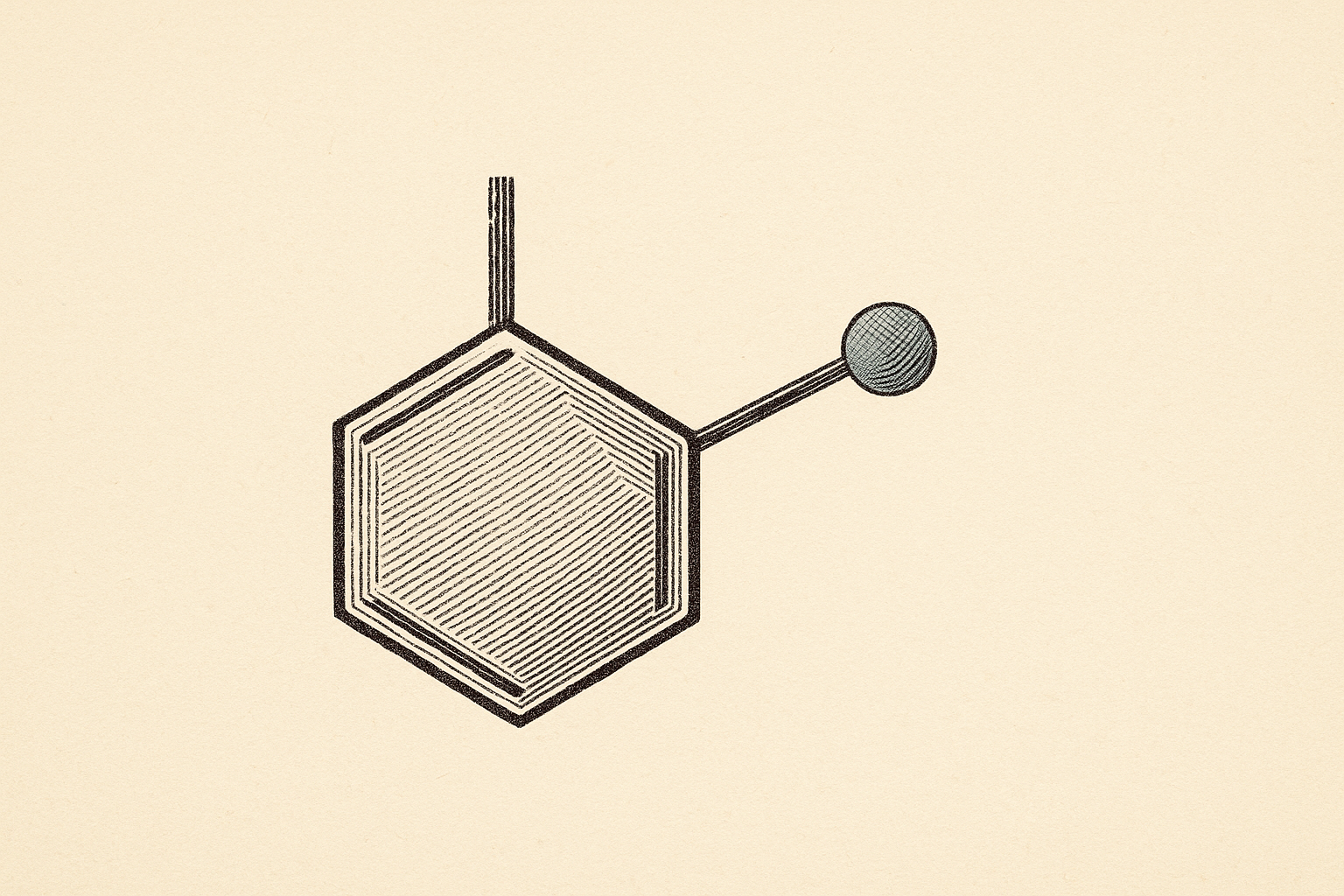
Multi-agent molecular optimization delivered a rapid-recovery intravenous anesthetic candidate with a wider safety margin, according to a new bioRxiv preprint. Rather than scoring molecules on a shared test, the pipeline ran optimization across coordinated specialist agents and came out with a compound characterized on the two properties anesthesiology actually cares about: how fast patients wake up, and how much room sits between an effective dose and a dangerous one. Agent-driven design has produced plenty of in silico wins; a named candidate with a stated therapeutic-window improvement is a different class of claim.

OpenAI keeps zero-data-retention option for frontier models
OpenAI reaffirmed zero data retention for frontier models, its option to not store prompts and outputs on OpenAI servers, while arguing that longer autonomous work pushes safety systems to watch for risk across more of a session. Retention is not isolation: data still passes through OpenAI's infrastructure for inference and safety screening. Keeping the no-storage option alive on the strongest models is what keeps unpublished sequence data and patient-derived records within reach of frontier systems under most institutional data agreements.

LiteFold ships LiteMol-1, its first molecule-design model
LiteFold released LiteMol-1 the company's first foundation model, meaning a broadly trained general model rather than one built for a single task. The announcement positions it against structure-based design tools like RFdiffusion, BoltzGen and O-Design, which have become the default route to designed binders and novel proteins. Details are thin so far, but any serious challenger to the structure-first default reopens a design question the field had mostly settled.
RAND maps nine safeguards against AI bioweapon risk
A RAND report proposes nine mitigation strategies against AI-designed biological weapons, aimed at government, tech companies, public health agencies and researchers alike. Biosecurity screening shifts from a model-provider problem to an expectation running through the whole discovery chain.
AI screening shortlists new CAR-T therapy targets
In silico screening shortlists CAR targets in a new bioRxiv preprint, using AI-supported analysis to rank chimeric antigen receptor candidates ahead of wet-lab validation. Target triage moves upstream in a modality where picking the wrong antigen costs years.
Brain Researcher adds analytic rigor to neuroimaging AI
Brain Researcher wraps neuroimaging agents in explicit statistical checks, aimed at the failure mode where an agent assembles a plausible pipeline and returns an unverifiable result. Analytic validity becomes something agent platforms have to ship, not something reviewers catch afterward.
Survey tracks AI agents running computational chemistry
AI agents in computational chemistry get a full accounting in a new arXiv perspective from Pavlo Dral, mapping how much of the calculation-to-conclusion loop now runs unattended. A reference point for how far autonomy has traveled in a discipline sitting next to drug design.
Reply with your discoveries. A human reads them. Forward freely.
|