
Claude learns chemistry; agents take on repurposing

-
Nº XXXI
- Date
- 08 Jun 2026
- Issue
- 31
- Stories
- Seven
- Editor
- ARC
Monday open: chemistry gets a real co-pilot, drug repurposing gets an agent stack, and the White House wants AI in the exam room.
Anthropic tunes Claude for chemistry

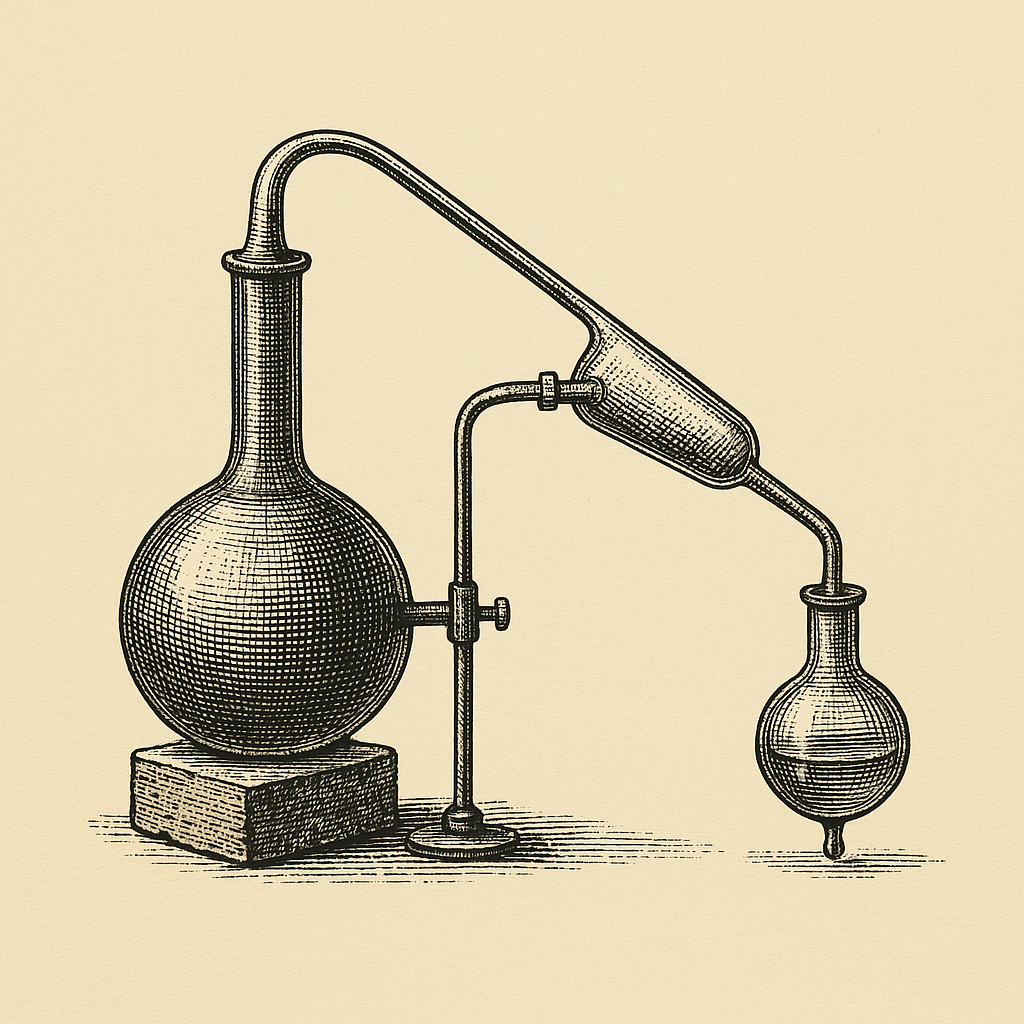
Anthropic is training Claude on chemistry alongside world-class synthetic, computational, and analytical chemists, the company said in a research post. The collaboration targets the gap general models hit on retrosynthesis, mechanism, and spectra interpretation — tasks where today's LLMs hallucinate confidently. Frontier labs treating chemistry as a first-class capability resets the reference ceiling for bench-relevant AI, and forces every general-purpose model to answer whether its chemistry is actually domain-grade or just plausible-sounding.
Agent stack tackles drug repurposing
A unified agent platform for drug repurposing spans molecular, phenotypic, and clinical scales in a single loop, per a new bioRxiv preprint. The architecture chains target-level reasoning to phenotype matching to patient-cohort evidence — the three handoffs that usually stall repurposing pipelines. Moves repurposing from siloed in-silico screens toward an end-to-end agent capability, the same end-to-end framing Anthropic is chasing in chemistry above.

Trump push for AI doctors
A Trump-backed push to bring AI doctors into American medicine is gathering momentum, per a Washington Post report surfaced on HN. The effort frames AI clinicians as a fix for access and cost, but skips most of the open questions on liability, evaluation, and oversight. Shifts the AI-in-clinic debate from "if" to "under what rules" — and makes regulatory posture, not model capability, the near-term gating factor for clinical deployment, the same dynamic Medicare's payment-model rewrite set in motion.
Reasoning model predicts AMR
BacteReason predicts antimicrobial resistance with an explicit reasoning trace rather than a black-box classifier, per a new bioRxiv preprint. Pairing AMR prediction with stepwise justification makes the output auditable — a prerequisite for any AMR call that feeds clinical or surveillance decisions.
Vision-language model reasons across scans
Comparative reasoning lands in radiology via a vision-language framework that explicitly compares prior and current scans rather than reading each in isolation, per a new arXiv paper. Closes one of the most-cited gaps in radiology AI: longitudinal comparison, where most deployed tools still pretend each image is the patient's first.
Plug-in amplifies subtle lesions
EasyLens boosts subtle-lesion detection in medical vision-language models without retraining, acting as a training-free plug-in over existing backbones. Lowers the cost ceiling for improving deployed medical VLMs — capability gains that previously needed fine-tuning now come from a wrapper.
Glasswing scales globally
Anthropic expanded Project Glasswing to roughly 150 new organizations across more than fifteen countries, widening access to Claude for research and public-interest work. Broadens the institutional base experimenting with frontier-model science.
Reply with your discoveries. A human reads them. Forward freely.
|