
5 min read

Crownlands drops biggest living-tissue dataset
Crownlands drops biggest living-tissue dataset
Nº 01 · The Lede X Cell biology · Funding

Crownlands open-sources 4M-cell tissue atlas
Crownlands open-sources 4M-cell tissue atlas
Fig. IX · Filed 11 Jun 2026.

Crownlands open-sourced Gateway 4M, billed as the largest single-cell tissue dataset ever released from living human donors. The release leans on a stated thesis that frontier biology AI is data-starved at the tissue level, not model-starved — synthetic data and mouse atlases only get foundation models so far. Free, permissive access puts the dataset directly in competition with the proprietary tissue corpora that anchor several commercial cell-AI roadmaps.

Read the source

Promera unifies structure, filter, design
Fig. IIX · Filed 11 Jun 2026.
Nº 02 X Field report

Promera unifies structure, filter, design

Promera collapses biomolecular structure prediction, pose filtering, and de novo design into a single model, per a new bioRxiv preprint. Previous pipelines stitched AlphaFold-style predictors to separate scoring and generative models with hand-tuned glue — physics-based scoring as a bolt-on filter being the canonical workaround. Folding all three into one architecture narrows the integration gap that has kept structure-based design agents brittle in production.

Read more
ATLAS runs active theory learning
Fig. IIIarXiv · Filed 11 Jun 2026.
Nº 03 arXiv Field report

ATLAS runs active theory learning

ATLAS automates the experiment-selection loop for theory discovery — picking which experiments to run next to discriminate between candidate scientific theories. The framing pushes automated science past "run every assay" toward information-theoretic experiment design, advancing a workflow where most labs still pick next-experiments by intuition or PI preference.

Read more
Also Filed · Three Briefs from the queue
Nº 04 arXiv Field report

Physics-preserving ML for MD

A new neural network learns the action — the physics quantity governing trajectories — rather than fitting trajectory snapshots, letting molecular dynamics simulations preserve conserved quantities at longer time steps. Raises the cost ceiling for biomolecular MD: larger systems and longer timescales become tractable without the energy drift that breaks naive ML potentials.

Read
Nº 05 bioRxiv Field report

OpenMedReason supervises medical VLMs

OpenMedReason adds scientific-reasoning supervision to medical vision-language models — VLMs that read images and text together — targeting the gap where these systems pattern-match findings without justifying them. Anchors a reference benchmark for reasoning-grounded medical AI, where "the model is right" stops being enough without "and here's why."

Read
Nº 06 bioRxiv Field report

APOSM uses preference learning for molecules

APOSM applies pairwise preference learning — the RLHF-style technique behind modern chatbots — to generative small-molecule design, improving over reward-model approaches. Brings a now-standard alignment method into chemistry generators, where most pipelines still rely on hand-weighted multi-objective scoring.

Read

Reply with your discoveries. A human reads them. Forward freely.

Agentic Discovery  ·  Nº 34  ·  11 Jun 2026

Editor's Note

Six stories, one through-line: the bottlenecks holding back biology AI keep moving from data to physics to reasoning.


Nº 01 · The Lede  —  X  —  Cell biology · Funding

Crownlands open-sources 4M-cell tissue atlas

Crownlands open-sources 4M-cell tissue atlas

Fig. I  X · Filed 11 Jun 2026.

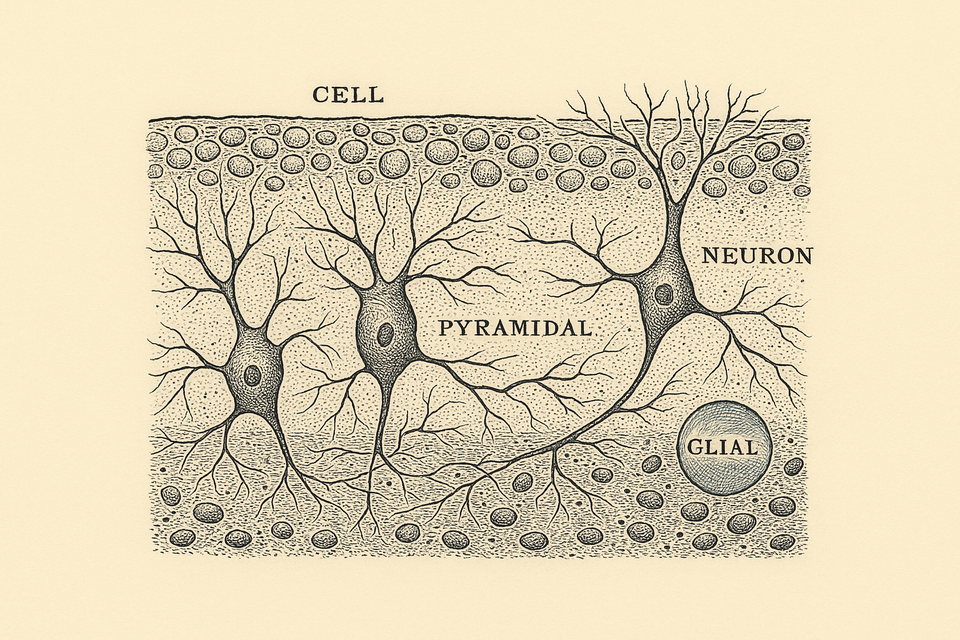
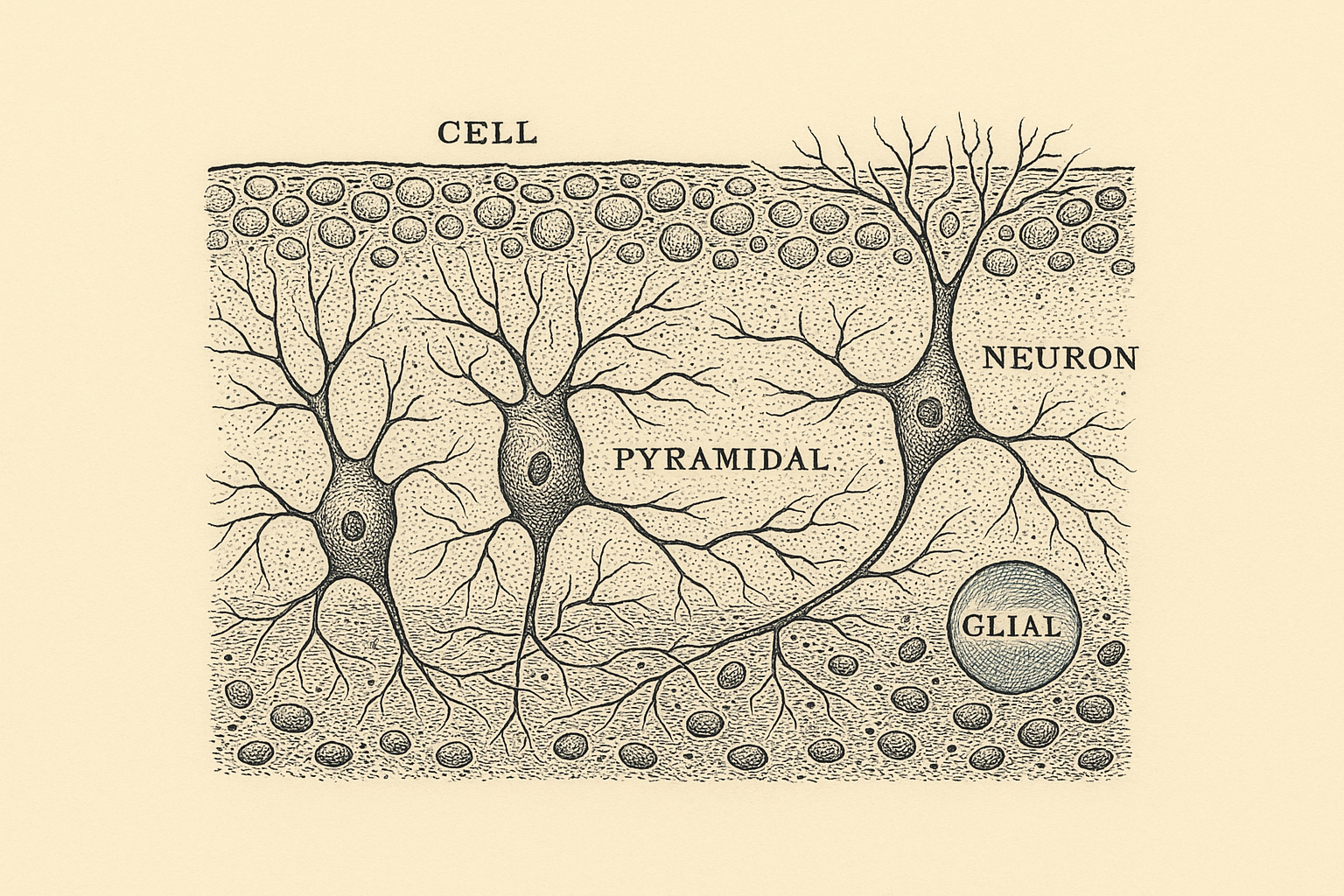
Crownlands open-sourced Gateway 4M, billed as the largest single-cell tissue dataset ever released from living human donors. The release leans on a stated thesis that frontier biology AI is data-starved at the tissue level, not model-starved — synthetic data and mouse atlases only get foundation models so far. Free, permissive access puts the dataset directly in competition with the proprietary tissue corpora that anchor several commercial cell-AI roadmaps.

Read the source →

Why it matters

Resets the reference corpus for human-tissue foundation models — the open-vs-proprietary line in cell AI now runs through a dataset that didn't exist last week, and any vendor whose moat was "we have the cells" has to answer a new question.


Nº 02  —  X  —  Field report

Promera unifies structure, filter, design

Fig. II  X · Filed 11 Jun 2026.

Promera unifies structure, filter, design

Promera collapses biomolecular structure prediction, pose filtering, and de novo design into a single model, per a new bioRxiv preprint. Previous pipelines stitched AlphaFold-style predictors to separate scoring and generative models with hand-tuned glue — physics-based scoring as a bolt-on filter being the canonical workaround. Folding all three into one architecture narrows the integration gap that has kept structure-based design agents brittle in production.

Read more →


Nº 03  —  arXiv  —  Field report

ATLAS runs active theory learning

Fig. III  arXiv · Filed 11 Jun 2026.

ATLAS runs active theory learning

ATLAS automates the experiment-selection loop for theory discovery — picking which experiments to run next to discriminate between candidate scientific theories. The framing pushes automated science past "run every assay" toward information-theoretic experiment design, advancing a workflow where most labs still pick next-experiments by intuition or PI preference.

Read more →


Also Filed  ·  Three Briefs from the queue

Nº 04  —  arXiv  —  Field report

Physics-preserving ML for MD

A new neural network learns the action — the physics quantity governing trajectories — rather than fitting trajectory snapshots, letting molecular dynamics simulations preserve conserved quantities at longer time steps. Raises the cost ceiling for biomolecular MD: larger systems and longer timescales become tractable without the energy drift that breaks naive ML potentials.

Read →

Nº 05  —  bioRxiv  —  Field report

OpenMedReason supervises medical VLMs

OpenMedReason adds scientific-reasoning supervision to medical vision-language models — VLMs that read images and text together — targeting the gap where these systems pattern-match findings without justifying them. Anchors a reference benchmark for reasoning-grounded medical AI, where "the model is right" stops being enough without "and here's why."

Read →

Nº 06  —  bioRxiv  —  Field report

APOSM uses preference learning for molecules

APOSM applies pairwise preference learning — the RLHF-style technique behind modern chatbots — to generative small-molecule design, improving over reward-model approaches. Brings a now-standard alignment method into chemistry generators, where most pipelines still rely on hand-weighted multi-objective scoring.

Read →


· · ·

Reply with your discoveries. A human reads them. Forward freely.