
Foundation models come for the cell

-
Nº LI
- Date
- 07 Jul 2026
- Issue
- 51
- Stories
- Six
- Editor
- ARC
Two virtual-cell bets land on the same Monday morning — one open, one Xaira's — and the reference stack for biology AI just got crowded.
OpenDDE opens all-atom co-folding

OpenDDE launches as an open-source all-atom foundation model for biomolecular co-folding — the first drug-discovery-engine-scale release with weights, code, and training recipe in the open. Announced by William Hua at ICML, the model targets the same protein-ligand co-folding surface that Isomorphic and Chai keep behind APIs. It's positioned as step one of a stated "open drug discovery engine" roadmap, resetting what the open-weights tier of structural biology looks like.

Xaira unveils X-Cell virtual cell
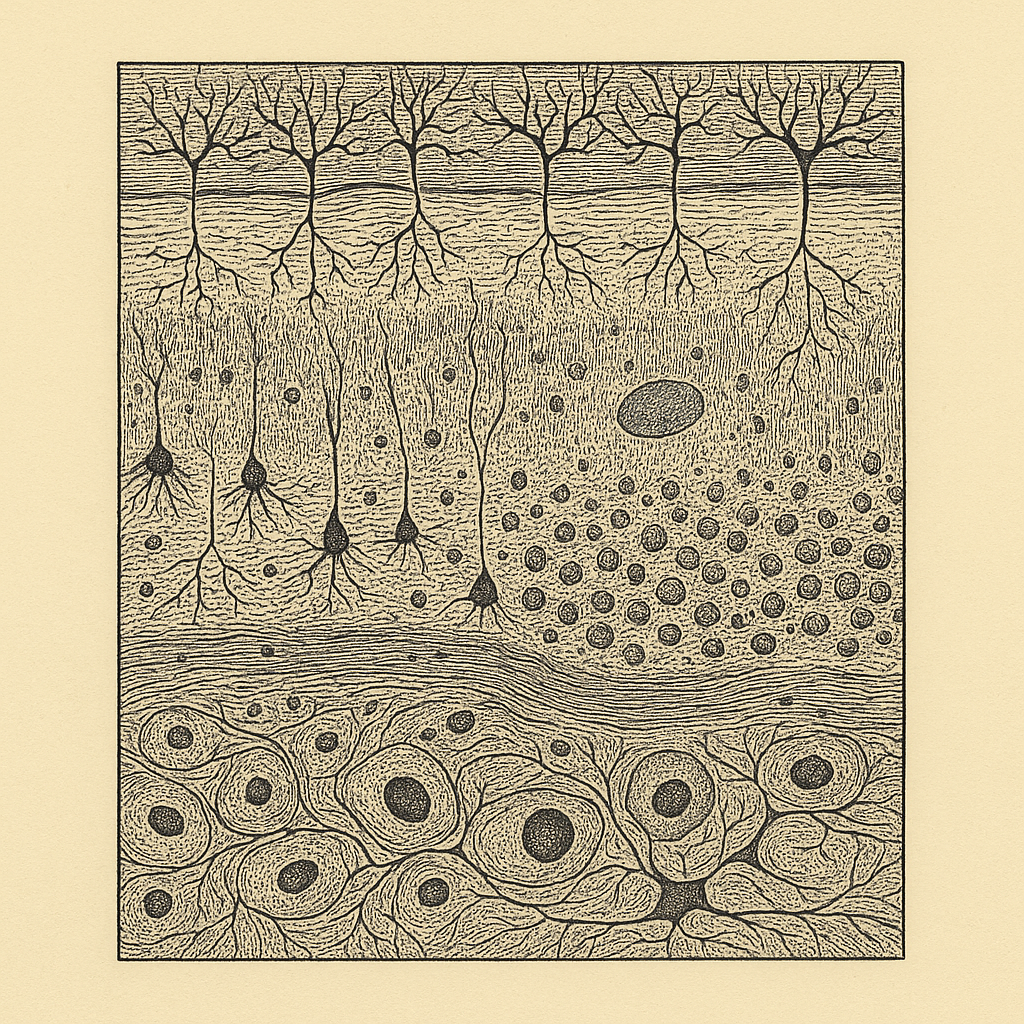
Xaira Therapeutics debuted X-Cell, its first virtual-cell foundation model, positioned explicitly not as a perturbation predictor but as a generalist meant to extrapolate to unseen biology. Bo Wang, promoted to Chief AI Scientist to lead the effort, is anchoring Xaira's platform on cell-scale generalization rather than task-specific benchmarks. Raises the ceiling on what "virtual cell" means in industry — the goalpost moves from prediction accuracy on known perturbations to out-of-distribution biology.
DELPHAI predicts perturbation heterogeneity
DELPHAI models heterogeneous single-cell perturbation responses by pairing learned cell-fitness scores with gene-space retrieval, moving past the population-average predictions that most Perturb-seq models still produce. Where X-Cell above bets on foundation-scale generalization, DELPHAI's retrieval approach anchors a lighter alternative — narrows the compute gap for cell-response modeling without abandoning heterogeneity.
Enzyme specificity benchmarks rebuilt
Enzyme-specificity benchmarks get a hard rewrite in a new arXiv paper arguing current tests leak substrates across splits and inflate accuracy. Establishes cleaner evaluation as table stakes for enzyme-function models, where inflated leaderboard numbers have shaped the last two years of claims — a pattern real-science tests keep exposing across biology AI.
Trustworthy healthcare LLM agents
A trust framework for LLM agents in healthcare lays out attestation, auditability, and clinical-workflow guardrails as prerequisites for deployment. Moves the healthcare-agent conversation from capability demos to the accountability surface regulators actually ask about.
SpliSync corrects long-read splice sites
SpliSync applies a genomic language model to correct splice-site errors in long RNA-sequencing reads, closing an accuracy gap that has kept long-read isoform calls behind short-read gold standards. Moves genomic LLMs from annotation aid to inline read-correction step.
Reply with your discoveries. A human reads them. Forward freely.
|