
Foundation models eat single-cell biology
-
Nº LX
- Date
- 21 Jul 2026
- Issue
- 60
- Stories
- Eight
- Editor
- ARC
Foundation-model Tuesday: single-cell, pathology, methylation, and PTMs all get their own — the era of one-model-per-modality is arriving fast.
Tabula predicts gene regulation, aging
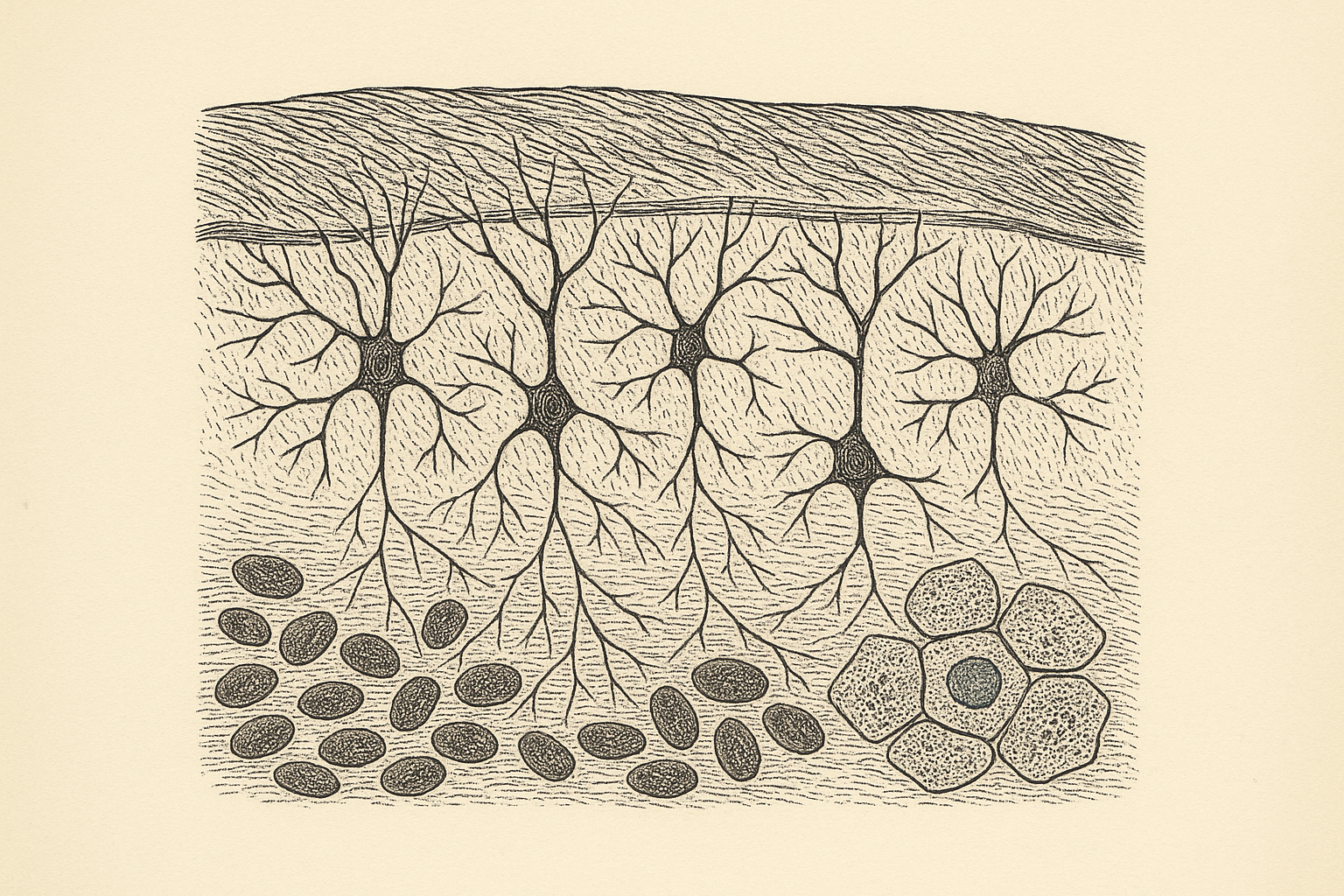
Tabula, a single-cell foundation model, was unveiled by Xiaojie Qiu's group with a privacy-preserving tabular training scheme — labs contribute data without exposing raw counts. The model targets gene-regulatory inference and aging trajectories, two areas where scRNA-seq foundation models have historically underperformed task-specific tools. Trained across federated cohorts, Tabula reframes what a virtual-cell model can promise: predictive regulatory dynamics, not just embedding quality, with a data-governance story attached.

OpenAI turns agents on safety
OpenAI introduced GPT-Red, an agent flywheel where current models red-team the next generation's safety evaluations. The pitch: automated adversarial testing scales faster than human review, and the same agent scaffolding driving capability gains now drives safety gains. Moves adversarial evaluation from a human bottleneck to a compute-bound process — reshapes what regulators and clinical deployers can reasonably demand before biomedical agents ship.
Anthropic funds rare-disease AI
Anthropic opened a targeted AI for Science call for rare genetic disease research, offering up to $50,000 in Claude credits over six months per accepted team. Small dollars by grant standards, but the signal matters: rare disease becomes a named vertical where a frontier lab wants a research community — anchors a reference funder for LLM-driven rare-disease work that had been scattered across one-off pilots.
ProtSyntax decodes PTM grammar
ProtSyntax, a protein language model trained to read post-translational modification syntax, predicts modification sites and their functional consequences jointly. PTMs have been the blind spot of protein LMs — sequence-only models miss most of the regulatory action. Closes a long-standing gap in what protein foundation models can meaningfully claim about function.
GigaPath-Flash speeds up pathology
GigaPath-Flash and GigaTIME-Flash compress Microsoft's pathology foundation models for whole-slide and tumor-microenvironment analysis at a fraction of the compute. Moves gigapixel pathology inference from cluster-scale to workstation-scale — narrows the deployment gap between foundation-model pathology and the hardware most cancer centers actually have.
LLMs stumble on 3D binding
A new benchmark asks whether language models can reason about molecular binding under spatial constraints. Answer: not really — LLMs handle 2D chemistry text well but fail when 3D geometry decides the answer. Anchors a hard ceiling on text-only chemistry claims — the same wall sequence models hit on 3D genome folding — and pushes the field back toward structure-aware architectures for drug design.
CpGPT models DNA methylation
CpGPT extends the foundation-model template to CpG methylation, giving epigenetic clocks and methylation-based diagnostics a pretrained base to fine-tune from. Methylation joins protein, single-cell, and pathology as modalities with their own foundation model.
Clay Seal proposes agent identity
Clay Seal Identity, an open-source project, pitches cryptographic accountability for agent actions — every tool call signed, every output traceable. Early and quiet on HN, but the direction matters: agent provenance is drifting toward a vendor criterion for anything touching clinical or regulated data.
Reply with your discoveries. A human reads them. Forward freely.
|