
6 min read

Foundation models eat spatial biology
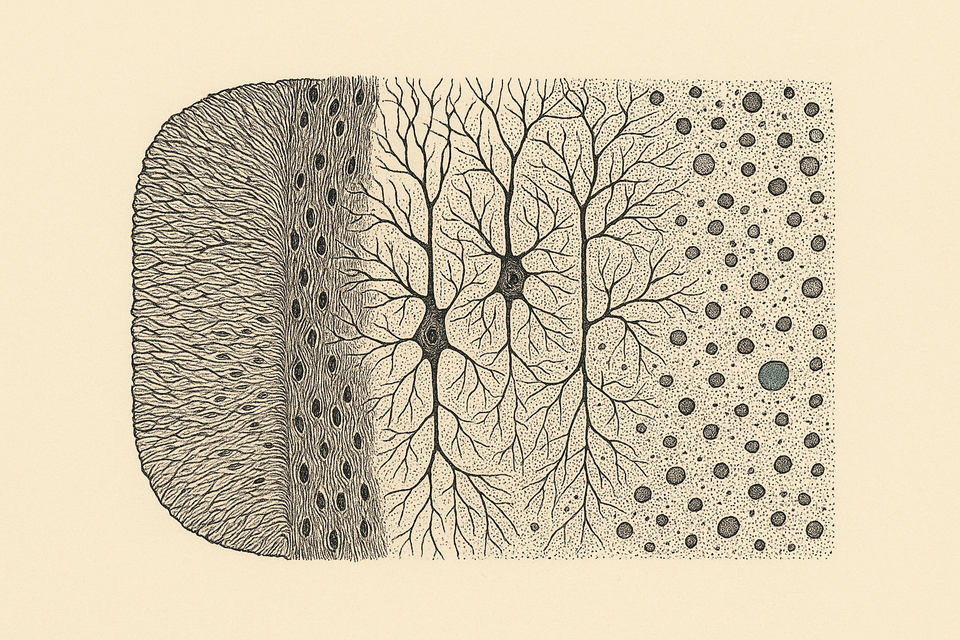
Foundation models eat spatial biology
Nº 01 · The Lede X Field report

Nature's tissue-scale foundation model
Nature's tissue-scale foundation model
Fig. IX · Filed 14 Aug 2026.

A tissue-scale foundation model landed in Nature, resolving spatial proteomics from subcellular signal up to whole-tissue organization inside a single pretrained model rather than a stack of task-specific tools. Spatial proteomics has run on pipelines hand-tuned per panel, per assay, per tissue, with cross-study comparison largely a matter of faith. Virtual Tissues pushes the virtual-cell program one level up the biological hierarchy, where the questions are about neighborhoods and architecture instead of individual cells. How well it holds up on unseen panels and tissues is the number everyone will check first.

Read the source

Open-source clinical agent framework
Fig. IIarXiv · Filed 14 Aug 2026.
Nº 02 arXiv Clinical AI · Evaluation

Open-source clinical agent framework

Multi-agent clinical reasoning goes open source with MARC v1, a framework that splits clinical reasoning across coordinated specialist agents instead of routing every question through one model. Posted to arXiv, it takes on the coordination problem that has kept clinical LLM demos from surviving contact with real workflows: who decides, who checks, and what happens when two agents disagree. Open reference implementations for clinical reasoning remain scarce, so the code here matters as much as the reported results.

Read more
Industry drafts agent incident reporting
Fig. IIIAxios · Filed 14 Aug 2026.
Nº 03 Axios Agents · Infrastructure

Industry drafts agent incident reporting

A 120-org coalition wants agent mishaps reported under a shared framework. The Open Secure AI Alliance, whose members include Nvidia, Cisco and CrowdStrike, is drafting the Shared AI Findings Exchange (SAFE), which would have participating companies disclose certain agent failures and preserve detailed records of what went wrong. No standard channel exists today for reporting when an autonomous agent breaks something. If SAFE holds, incident disclosure turns into a procurement question for agents touching clinical data or lab instrumentation, not a courtesy.

Read more
Also Filed · Four Briefs from the queue
Nº 04 arXiv Agents · Infrastructure

Judging agents by process

Final scores hide agent failures, argues a new arXiv evaluation that tracks long-horizon research and development runs step by step rather than grading only the endpoint. Process-level scoring raises the bar for any claim that an agent can carry a research program unattended.

Read
Nº 05 bioRxiv Field report

Ensembles speed siRNA design

FENNEC screens chemically modified siRNA using fine-tuned neural network ensembles, pulling modification patterns into the design step instead of leaving them as a downstream filter. Modification-aware prediction is where siRNA screening throughput has been slowest to move.

Read
Nº 06 X Computational biology

Mapping AI-bio venture capital

A capital map for AI-plus-biology venture funding published as the TechBio 50, naming the firms most active at that intersection. Making the money structure legible matters in a field whose research direction is set in large part by who writes the checks.

Read
Nº 07 bioRxiv Computational biology

Transformers read the microbiome

Transformers learn microbiome grammar in a new bioRxiv preprint treating community composition as a language. Extends sequence-model methods past proteins and genomes into microbial ecology, where analysis still leans heavily on diversity metrics.

Read

Reply with your discoveries. A human reads them. Forward freely.

Agentic Discovery  ·  Nº 77  ·  14 Aug 2026

Editor's Note

A tissue-scale foundation model in Nature, clinical agents in the open, and the industry drafting agent incident reports.


Nº 01 · The Lede  —  X  —  Field report

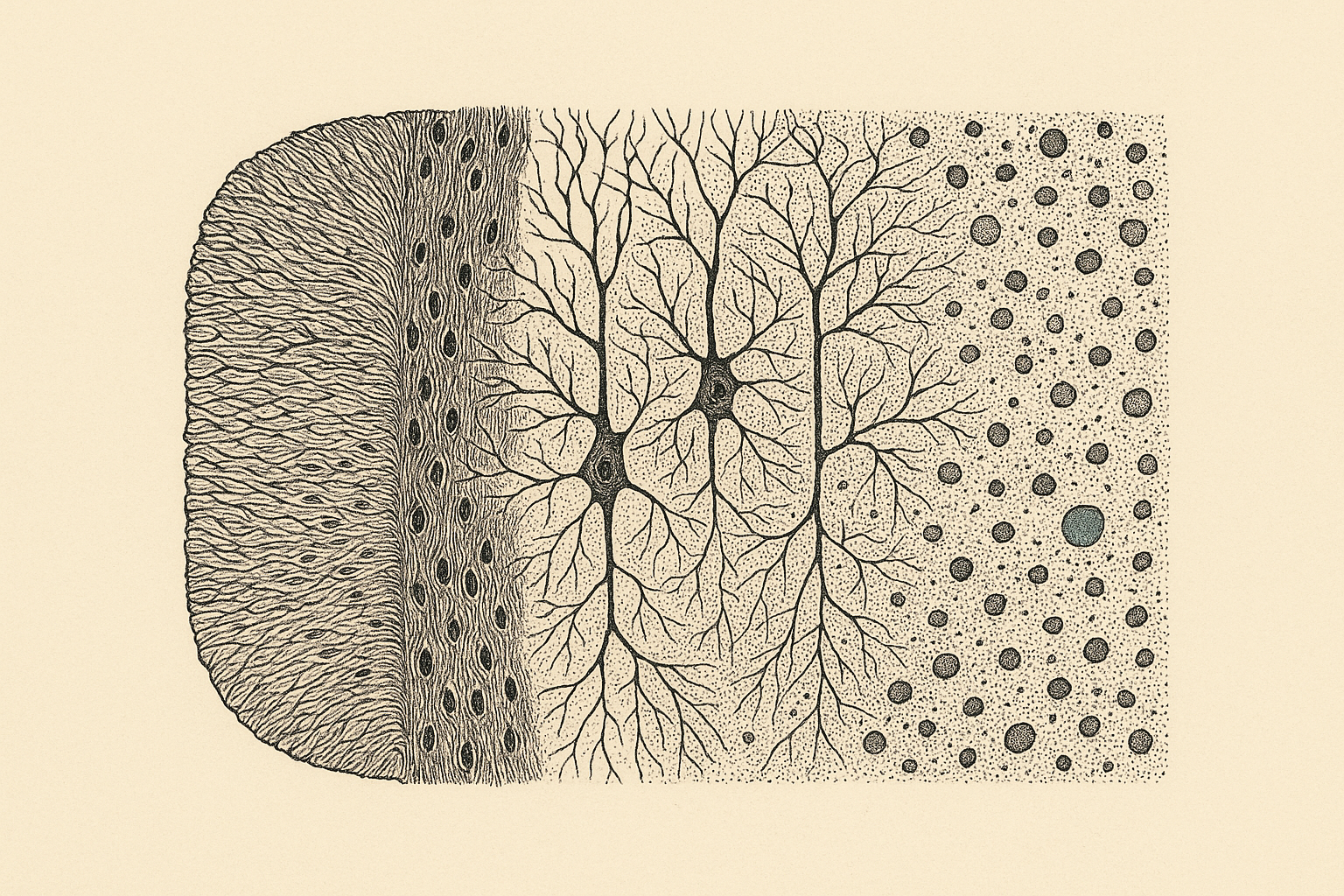
Nature's tissue-scale foundation model

Nature's tissue-scale foundation model

Fig. I  X · Filed 14 Aug 2026.

A tissue-scale foundation model landed in Nature, resolving spatial proteomics from subcellular signal up to whole-tissue organization inside a single pretrained model rather than a stack of task-specific tools. Spatial proteomics has run on pipelines hand-tuned per panel, per assay, per tissue, with cross-study comparison largely a matter of faith. Virtual Tissues pushes the virtual-cell program one level up the biological hierarchy, where the questions are about neighborhoods and architecture instead of individual cells. How well it holds up on unseen panels and tissues is the number everyone will check first.

Read the source →

Why it matters

Tissue-scale foundation models now have a peer-reviewed reference point instead of a pile of competing preprint claims, which resets what a credible "foundation model for spatial biology" has to clear.


Nº 02  —  arXiv  —  Clinical AI · Evaluation

Open-source clinical agent framework

Fig. II  arXiv · Filed 14 Aug 2026.

Open-source clinical agent framework

Multi-agent clinical reasoning goes open source with MARC v1, a framework that splits clinical reasoning across coordinated specialist agents instead of routing every question through one model. Posted to arXiv, it takes on the coordination problem that has kept clinical LLM demos from surviving contact with real workflows: who decides, who checks, and what happens when two agents disagree. Open reference implementations for clinical reasoning remain scarce, so the code here matters as much as the reported results.

Read more →


Nº 03  —  Axios  —  Agents · Infrastructure

Industry drafts agent incident reporting

Fig. III  Axios · Filed 14 Aug 2026.

Industry drafts agent incident reporting

A 120-org coalition wants agent mishaps reported under a shared framework. The Open Secure AI Alliance, whose members include Nvidia, Cisco and CrowdStrike, is drafting the Shared AI Findings Exchange (SAFE), which would have participating companies disclose certain agent failures and preserve detailed records of what went wrong. No standard channel exists today for reporting when an autonomous agent breaks something. If SAFE holds, incident disclosure turns into a procurement question for agents touching clinical data or lab instrumentation, not a courtesy.

Read more →


Also Filed  ·  Four Briefs from the queue

Nº 04  —  arXiv  —  Agents · Infrastructure

Judging agents by process

Final scores hide agent failures, argues a new arXiv evaluation that tracks long-horizon research and development runs step by step rather than grading only the endpoint. Process-level scoring raises the bar for any claim that an agent can carry a research program unattended.

Read →

Nº 05  —  bioRxiv  —  Field report

Ensembles speed siRNA design

FENNEC screens chemically modified siRNA using fine-tuned neural network ensembles, pulling modification patterns into the design step instead of leaving them as a downstream filter. Modification-aware prediction is where siRNA screening throughput has been slowest to move.

Read →

Nº 06  —  X  —  Computational biology

Mapping AI-bio venture capital

A capital map for AI-plus-biology venture funding published as the TechBio 50, naming the firms most active at that intersection. Making the money structure legible matters in a field whose research direction is set in large part by who writes the checks.

Read →

Nº 07  —  bioRxiv  —  Computational biology

Transformers read the microbiome

Transformers learn microbiome grammar in a new bioRxiv preprint treating community composition as a language. Extends sequence-model methods past proteins and genomes into microbial ecology, where analysis still leans heavily on diversity metrics.

Read →


· · ·

Reply with your discoveries. A human reads them. Forward freely.