
LLMs meet the cell, X-ray, and genome
Good Morning!
Whole-cell simulation, karyotyping microservices, and a chest X-ray reasoning dataset — the bio-AI stack keeps adding floors.
1. Chain-of-thought dataset for chest X-ray AI
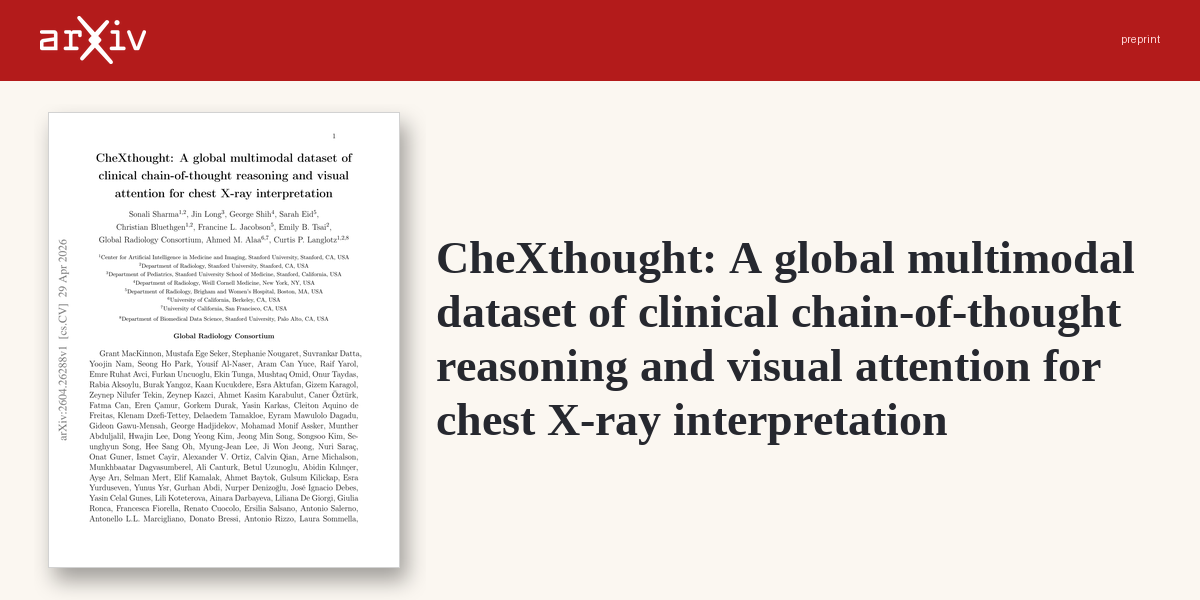
CheXthought benchmarks clinical reasoning on chest X-ray interpretation with a global multimodal dataset that pairs image attention maps with physician chain-of-thought traces — step-by-step records of how a clinician moves from image to diagnosis. For radiology AI teams, this shifts evaluation from "the model got the right answer" to "the model got there the right way," which is the bar regulators are starting to demand. Read More →
Why it matters: FDA submissions for radiology AI are increasingly expected to justify intermediate reasoning, not just final labels. CheXthought gives developers a labeled dataset to train and audit against that standard before it becomes mandatory.
2. Protein language models stress-tested for search
Protein sequence search diagnosed across modern language model (LM) embeddings in a new bioRxiv preprint — pinpointing where embedding-based retrieval breaks down relative to classical alignment tools. The results are a practical checklist. If your pipeline touches remote homolog detection, functional annotation, or database query at scale, this paper maps the failure modes worth testing before you trust LM-based search in production. Read More →
3. Gene expression prediction gets explainability boost
Prototype Booster adds an interpretable layer on top of existing genomic foundation models for gene expression prediction. The method uses prototype-based learning — predictions tied to concrete reference examples rather than opaque latent vectors — so you can trace why the model called a given expression pattern. In functional genomics and drug-response work, that kind of interpretability is moving from optional to expected during model review. Read More →
4. AI karyotyping as deployable microservice
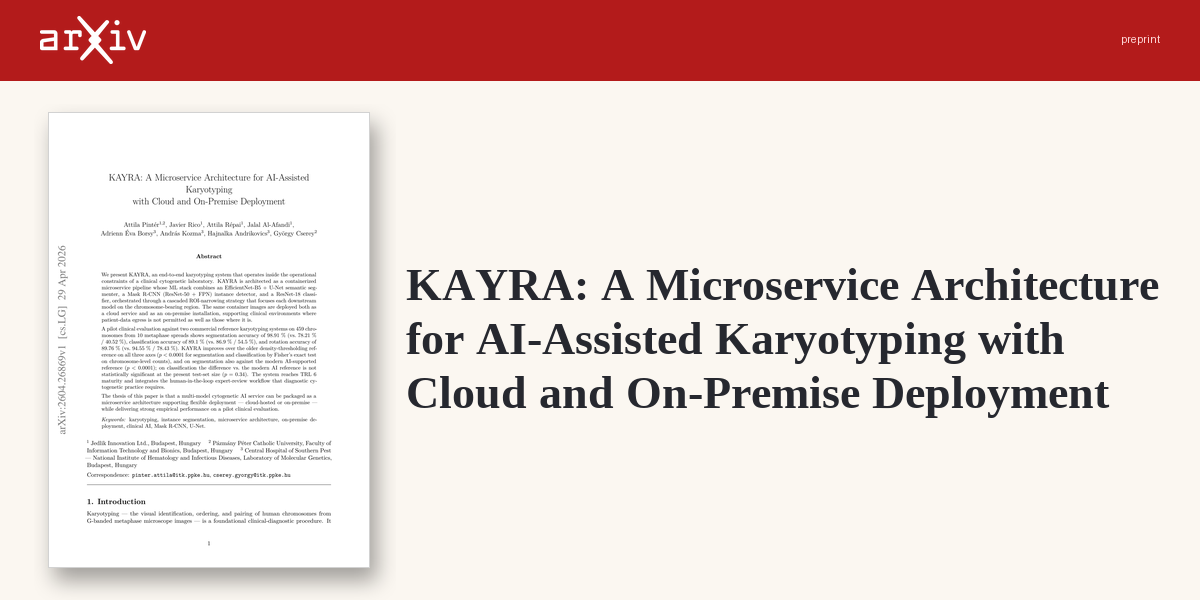
KAYRA packages AI-assisted karyotyping as a microservice architecture — modular, swappable components that run independently — with both cloud and on-premise deployment paths. The on-premise option matters most for cytogenetics labs in jurisdictions where patient genomic data cannot leave local infrastructure. Read More →
5. Whole-cell chemical simulation advances
Physics-accurate simulation of a full cellular interior got a notable signal boost this week, with a widely shared post pointing to new progress on modeling molecular crowding inside living cells. The goalpost for computational pharmacology is clear: once simulated intracellular environments are accurate enough, teams can probe drug-target interactions without a wet-lab confirmation step. That moment isn't here yet, but it's closer. Read More →
Reply with your discoveries. A human reads them. Forward freely.