
6 min read

A biotech staffed entirely by agents
A biotech staffed entirely by agents
Nº 01 · The Lede X Drug discovery · Computational

Science paper runs drug discovery with thousands of agents
Science paper runs drug discovery with thousands of agents
Fig. IX · Filed 18 Sep 2026.

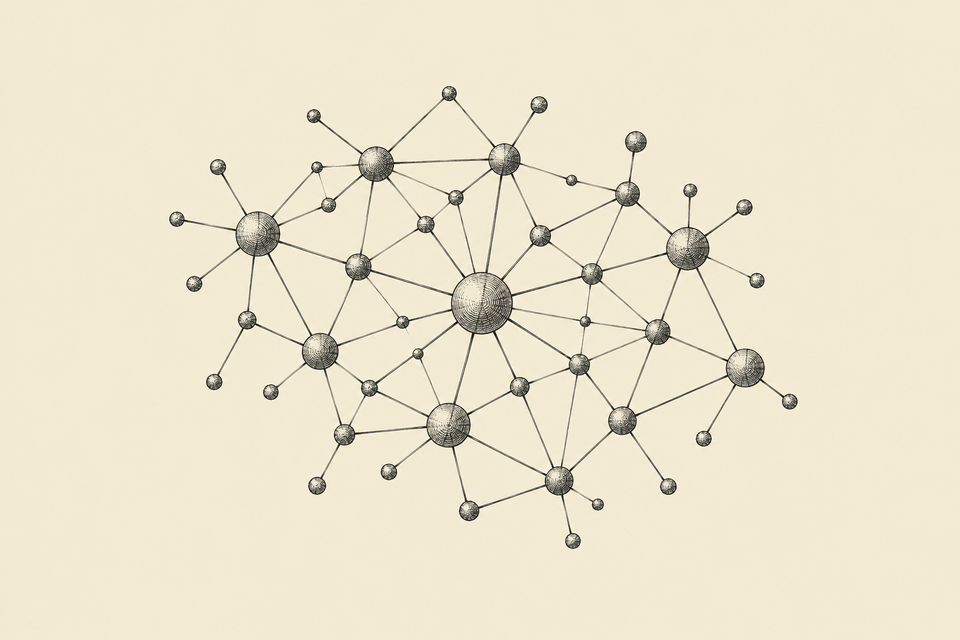
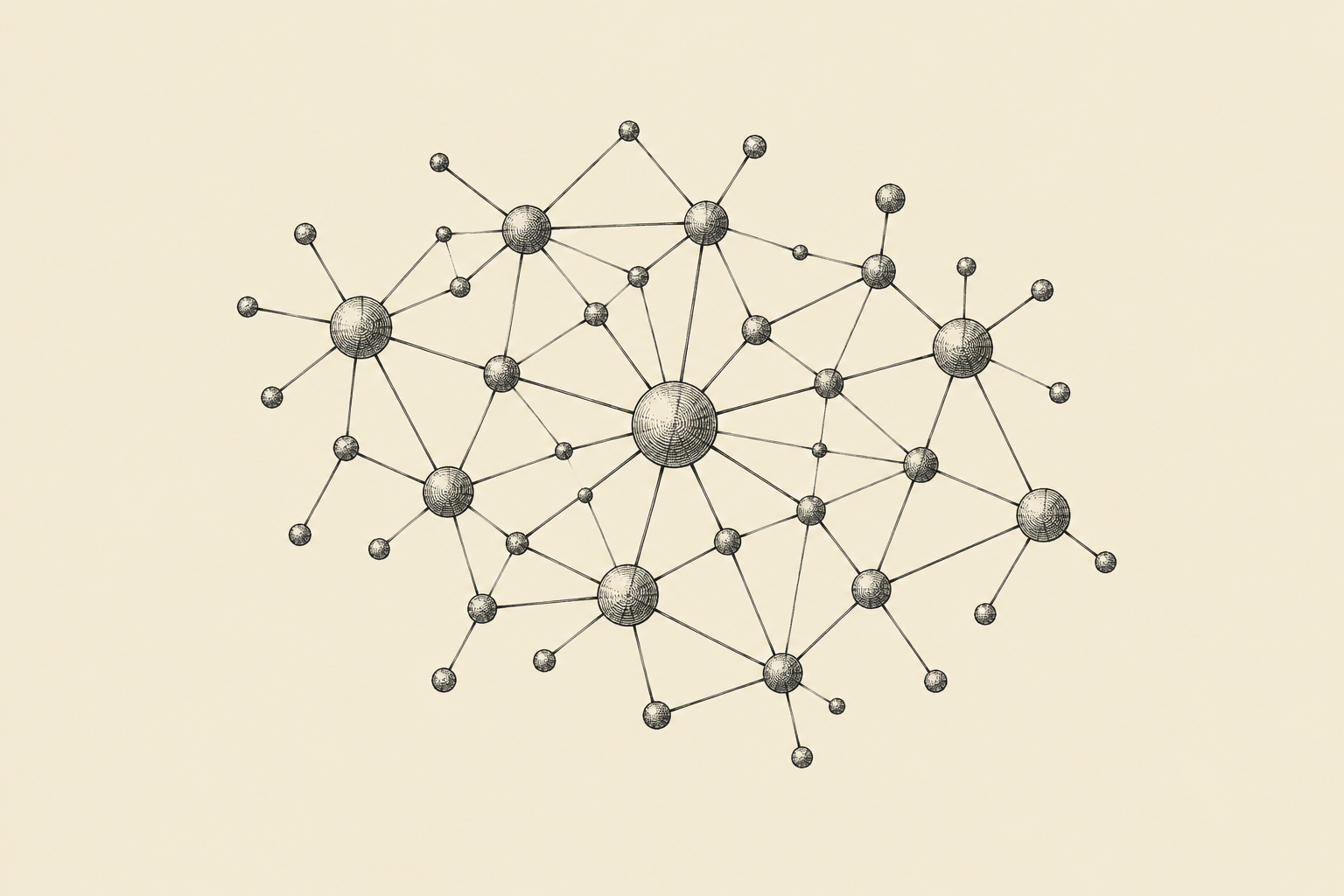
Tens of thousands of agents run a simulated biotech end to end in VirtualBiotech, published in Science and announced by Stanford's James Zou. Agent populations coordinate across the full pipeline, from target discovery through clinical development, instead of pointing one model at one step. Scale is the claim — most agent demos in drug discovery have been narrow and single-task, and they rarely survive the handoffs between stages. Landing in Science moves multi-agent drug discovery from engineering demo to peer-reviewed result, and gives the field a reference architecture it now has to argue with.

Read the source →

Anthropic opens a verification path for life-science users
Fig. IIAnthropic · Filed 18 Sep 2026.
Nº 02 Anthropic Field report

Anthropic opens a verification path for life-science users

Anthropic launched a Life Sciences Verification Program, a formal route for life-sciences organizations to verify themselves with the company. Frontier AI vendors have spent two years restricting biology-adjacent capabilities to limit misuse, and legitimate research kept getting caught in the same net. A credentialing path turns blanket caution into a check on who you are, which makes verified status a live distinction in what biology work frontier models will do at all. What verification unlocks in practice is what the program's details have to answer.
Read more →
Liquid AI puts longevity models on Cell's cover
Fig. IIIX · Filed 18 Sep 2026.
Nº 03 X Cell biology · Funding

Liquid AI puts longevity models on Cell's cover

Liquid AI claims top scores on biological longevity tasks in a Cell cover article, using instances of its Liquid Foundation Models, a model family built on an architecture other than the transformer that underlies most LLMs. A non-transformer stack on the cover of Cell is a real datapoint in an argument that has mostly run on benchmarks: whether architecture choices made for general modeling transfer to aging biology, where data is sparse and endpoints are slow. Company-reported wins still want outside replication.

Read more →
Also Filed · Five Briefs from the queue
Nº 04 Anthropic Computational biology

Anthropic measures Claude's lift in biomolecular modeling

Claude helps with biomolecular modeling , Anthropic says in a research writeup on where its general-purpose model provides uplift. Vendor-run evidence, but it sharpens a live question: how much structural and molecular work a general model carries before a purpose-built tool is required.

Read →
Nº 05 bioRxiv Drug discovery · Computational

LLMsFold checks generated drug candidates against physics

LLMsFold runs generated molecules through biophysical simulation for de novo drug design, testing candidates against physics rather than model confidence alone. Coupling generation to simulation tightens the standard for what counts as a designed molecule instead of a plausible string.

Read →
Nº 06 arXiv Field report

TorchCraft inverts a structure predictor to design binders

TorchCraft turns a structure predictor backwards into a binder generator, doing design with the all-atom prediction model itself instead of training a separate generative one. One model for both jobs collapses the two-tool workflow most binder pipelines still run end to end.

Read →
Nº 07 bioRxiv Field report

OpenAntigens indexes the surfaceome for antigen design

OpenAntigens maps antigen constructs across the human cell-surface and secreted proteome in a structure-aware database. Construct design has run largely on group-level know-how and one-off modeling; a shared reference makes those choices checkable between labs.

Read →
Nº 08 arXiv Clinical AI · Evaluation

CliniCIRCA builds mental-health timelines from raw EHR notes

CliniCIRCA rebuilds patient journeys from unstructured EHR narratives, assembling longitudinal mental-health timelines through a modular chain of language-model steps. Ordering psychiatric notes into usable clinical histories is the bottleneck that has kept this record type out of scaled research.

Read →

Reply with your discoveries. A human reads them. Forward freely.

Agentic Discovery  ·  Nº 102  ·  18 Sep 2026

Editor's Note

Agents got an org chart today, and frontier biology capability got a bouncer.


Nº 01 · The Lede  —  X  —  Drug discovery · Computational

Science paper runs drug discovery with thousands of agents

Science paper runs drug discovery with thousands of agents

Fig. I  X · Filed 18 Sep 2026.

Tens of thousands of agents run a simulated biotech end to end in VirtualBiotech, published in Science and announced by Stanford's James Zou. Agent populations coordinate across the full pipeline, from target discovery through clinical development, instead of pointing one model at one step. Scale is the claim — most agent demos in drug discovery have been narrow and single-task, and they rarely survive the handoffs between stages. Landing in Science moves multi-agent drug discovery from engineering demo to peer-reviewed result, and gives the field a reference architecture it now has to argue with.

Read the source →

Why it matters

Peer review just validated agent populations, rather than single agents, as the unit of work in computational drug discovery, which makes "how many agents, coordinated how" a design question every discovery platform has to answer.


Nº 02  —  Anthropic  —  Field report

Anthropic opens a verification path for life-science users

Fig. II  Anthropic · Filed 18 Sep 2026.

Anthropic opens a verification path for life-science users

Anthropic launched a Life Sciences Verification Program, a formal route for life-sciences organizations to verify themselves with the company. Frontier AI vendors have spent two years restricting biology-adjacent capabilities to limit misuse, and legitimate research kept getting caught in the same net. A credentialing path turns blanket caution into a check on who you are, which makes verified status a live distinction in what biology work frontier models will do at all. What verification unlocks in practice is what the program's details have to answer.

Read more →


Nº 03  —  X  —  Cell biology · Funding

Liquid AI puts longevity models on Cell's cover

Fig. III  X · Filed 18 Sep 2026.

Liquid AI puts longevity models on Cell's cover

Liquid AI claims top scores on biological longevity tasks in a Cell cover article, using instances of its Liquid Foundation Models, a model family built on an architecture other than the transformer that underlies most LLMs. A non-transformer stack on the cover of Cell is a real datapoint in an argument that has mostly run on benchmarks: whether architecture choices made for general modeling transfer to aging biology, where data is sparse and endpoints are slow. Company-reported wins still want outside replication.

Read more →


Also Filed  ·  Five Briefs from the queue

Nº 04  —  Anthropic  —  Computational biology

Anthropic measures Claude's lift in biomolecular modeling

Claude helps with biomolecular modeling , Anthropic says in a research writeup on where its general-purpose model provides uplift. Vendor-run evidence, but it sharpens a live question: how much structural and molecular work a general model carries before a purpose-built tool is required.

Read →

Nº 05  —  bioRxiv  —  Drug discovery · Computational

LLMsFold checks generated drug candidates against physics

LLMsFold runs generated molecules through biophysical simulation for de novo drug design, testing candidates against physics rather than model confidence alone. Coupling generation to simulation tightens the standard for what counts as a designed molecule instead of a plausible string.

Read →

Nº 06  —  arXiv  —  Field report

TorchCraft inverts a structure predictor to design binders

TorchCraft turns a structure predictor backwards into a binder generator, doing design with the all-atom prediction model itself instead of training a separate generative one. One model for both jobs collapses the two-tool workflow most binder pipelines still run end to end.

Read →

Nº 07  —  bioRxiv  —  Field report

OpenAntigens indexes the surfaceome for antigen design

OpenAntigens maps antigen constructs across the human cell-surface and secreted proteome in a structure-aware database. Construct design has run largely on group-level know-how and one-off modeling; a shared reference makes those choices checkable between labs.

Read →

Nº 08  —  arXiv  —  Clinical AI · Evaluation

CliniCIRCA builds mental-health timelines from raw EHR notes

CliniCIRCA rebuilds patient journeys from unstructured EHR narratives, assembling longitudinal mental-health timelines through a modular chain of language-model steps. Ordering psychiatric notes into usable clinical histories is the bottleneck that has kept this record type out of scaled research.

Read →


· · ·

Reply with your discoveries. A human reads them. Forward freely.