
4 min read

Agents learn to formulate, parse, and predict
Agents learn to formulate, parse, and predict
Nº 01 · The Lede arXiv Agents · Infrastructure

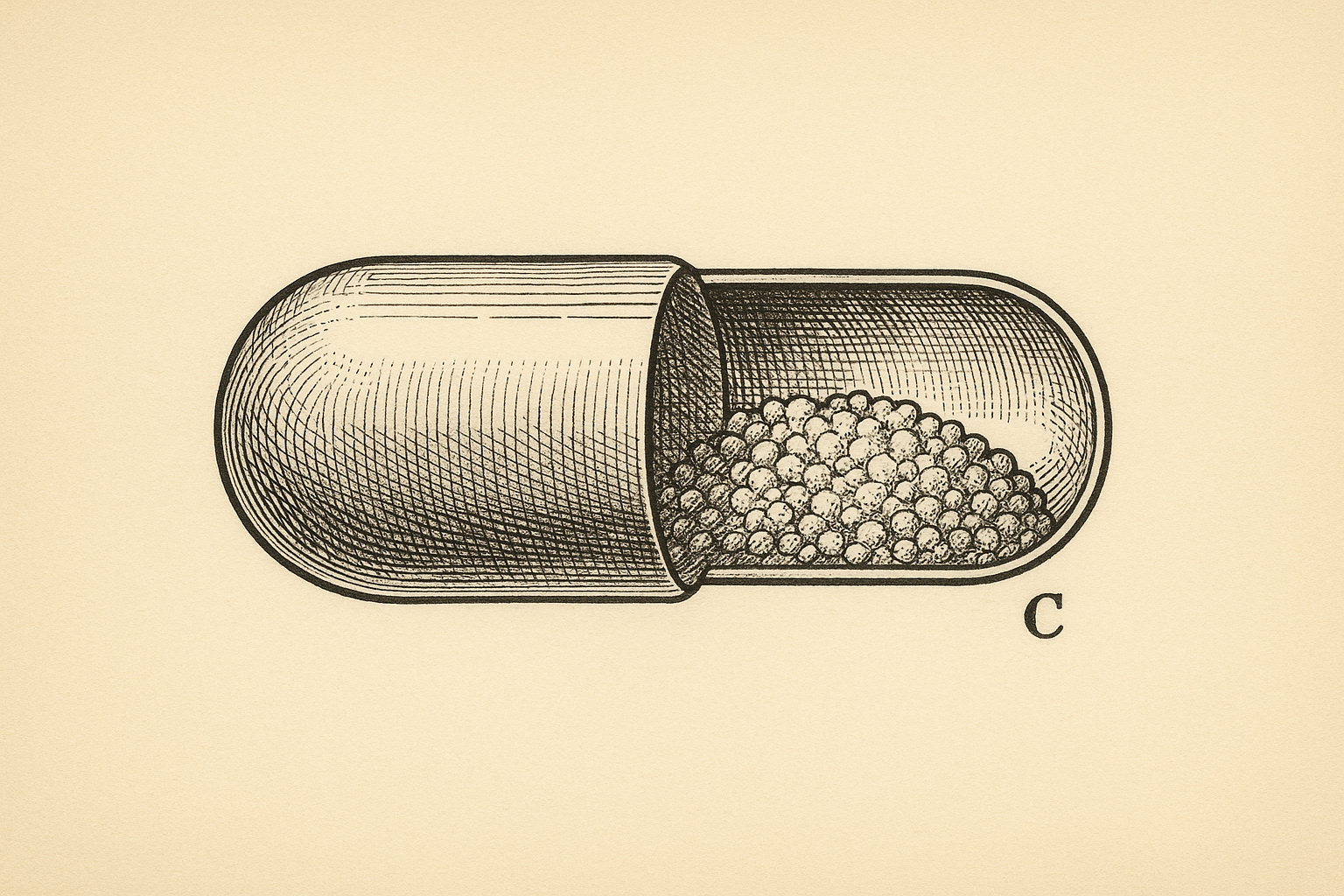
Agents formulate cryo-microneedles autonomously
Agents formulate cryo-microneedles autonomously
Fig. IarXiv · Filed 20 May 2026.

An autonomous agent designs cryomicroneedle drug-delivery formulations end-to-end in a new arXiv preprint, chaining excipient selection, freezing-protocol design, and mechanical-property prediction into a single closed loop. Cryomicroneedles — frozen, dissolvable patches for transdermal biologics delivery — usually demand weeks of iterative formulation work per candidate. Moving formulation science from human-driven iteration to agent-driven search resets what a small drug-delivery group can attempt per quarter, and pulls a notoriously empirical subfield into the same agent-loop paradigm that's reshaped molecular design.

Read the source

BioGAIP automates bioinformatics workflows
Fig. IIbioRxiv · Filed 20 May 2026.
Nº 02 bioRxiv Computational biology

BioGAIP automates bioinformatics workflows

BioGAIP orchestrates an LLM-powered multi-agent system across automated bioinformatics tasks, with the authors pitching scalability and robustness as the differentiators over single-agent baselines. Multi-agent orchestration for analysis pipelines is becoming the default architecture, raising the floor for what a general-purpose biology agent should do out of the box — single-agent demos no longer set the reference bar.

Read more
Mechanism rules tune enzyme novelty
Fig. IIIbioRxiv · Filed 20 May 2026.
Nº 03 bioRxiv Field report

Mechanism rules tune enzyme novelty

Mechanism-informed rules tune the novelty-feasibility tradeoff in predicted enzymatic reactions, giving users a dial between exotic-but-implausible and safe-but-known chemistry. Anchors a new reference benchmark for enzyme-design models — vague claims about 'novel reactions' now have a tunable axis competitors must report against.

Read more
Also Filed · One Brief from the queue
Nº 04 arXiv Field report

MSAlign links molecules to mass spectra

MSAlign aligns molecule and mass-spectra foundation models for metabolite identification, bridging two previously siloed embedding spaces. Closes a long-standing integration gap in untargeted metabolomics, where library-matching ceilings have capped what untargeted screens can confidently identify.

Read

Reply with your discoveries. A human reads them. Forward freely.

Agentic Discovery  ·  Nº 19  ·  20 May 2026

Editor's Note

Light queue today, but four papers each push a different corner of agent-driven biology forward.


Nº 01 · The Lede  —  arXiv  —  Agents · Infrastructure

Agents formulate cryo-microneedles autonomously

Agents formulate cryo-microneedles autonomously

Fig. I  arXiv · Filed 20 May 2026.

An autonomous agent designs cryomicroneedle drug-delivery formulations end-to-end in a new arXiv preprint, chaining excipient selection, freezing-protocol design, and mechanical-property prediction into a single closed loop. Cryomicroneedles — frozen, dissolvable patches for transdermal biologics delivery — usually demand weeks of iterative formulation work per candidate. Moving formulation science from human-driven iteration to agent-driven search resets what a small drug-delivery group can attempt per quarter, and pulls a notoriously empirical subfield into the same agent-loop paradigm that's reshaped molecular design.

Read the source →

Why it matters

First demonstration that formulation science — long considered too empirical for AI agents — yields to the same closed-loop treatment as molecular design, opening a new frontier for agent deployment beyond the usual binder-and-structure beats.


Nº 02  —  bioRxiv  —  Computational biology

BioGAIP automates bioinformatics workflows

Fig. II  bioRxiv · Filed 20 May 2026.

BioGAIP automates bioinformatics workflows

BioGAIP orchestrates an LLM-powered multi-agent system across automated bioinformatics tasks, with the authors pitching scalability and robustness as the differentiators over single-agent baselines. Multi-agent orchestration for analysis pipelines is becoming the default architecture, raising the floor for what a general-purpose biology agent should do out of the box — single-agent demos no longer set the reference bar.

Read more →


Nº 03  —  bioRxiv  —  Field report

Mechanism rules tune enzyme novelty

Fig. III  bioRxiv · Filed 20 May 2026.

Mechanism rules tune enzyme novelty

Mechanism-informed rules tune the novelty-feasibility tradeoff in predicted enzymatic reactions, giving users a dial between exotic-but-implausible and safe-but-known chemistry. Anchors a new reference benchmark for enzyme-design models — vague claims about 'novel reactions' now have a tunable axis competitors must report against.

Read more →


Also Filed  ·  One Brief from the queue

Nº 04  —  arXiv  —  Field report

MSAlign links molecules to mass spectra

MSAlign aligns molecule and mass-spectra foundation models for metabolite identification, bridging two previously siloed embedding spaces. Closes a long-standing integration gap in untargeted metabolomics, where library-matching ceilings have capped what untargeted screens can confidently identify.

Read →


· · ·

Reply with your discoveries. A human reads them. Forward freely.