
5 min read

An AI company starts doing biology
An AI company starts doing biology
Nº 01 · The Lede Anthropic Agents · Infrastructure

Claude agents find an enzyme system of unknown function
Claude agents find an enzyme system of unknown function
Fig. IAnthropic · Filed 29 Oct 2026.

Claude agents found an enzyme system whose function is still unknown, Anthropic reported on its research blog. Agents here means AI software that carries out multi-step work on its own, in this case built on Anthropic's Claude models. The finding is one of the early results from Anthropic's new life sciences research lab. Since nobody yet knows what the enzymes do, the agents have so far only spotted a new system, and its biology still has to be worked out. Readers will want to check the company's own write-up for how the agents flagged it and what experimental evidence supports the call.
Read the source →

Preprint fixes how automated cell labs pick experiments
Fig. IIbioRxiv · Filed 29 Oct 2026.
Nº 02 bioRxiv Cell biology · Funding

Preprint fixes how automated cell labs pick experiments

Fix the measurement model first, argues a bioRxiv preprint on self-driving laboratories that experiment on living cells. A self-driving lab pairs automated experiments with an optimiser, the algorithm that reads each result and picks what to run next. The preprint proposes fixes to that optimiser, and its title says which comes first: correct how the system models its own measurements before tuning the rules it uses to choose experiments. Readouts from living cells are noisy, so the way an optimiser interprets each measurement affects every choice after it.

Read more →
Anthropic adds 20 partners to its AI for Science program
Fig. IIIAnthropic · Filed 29 Oct 2026.
Nº 03 Anthropic Field report

Anthropic adds 20 partners to its AI for Science program

Anthropic expanded its AI for Science program and highlighted 20 scientific foundations, institutions and research groups from around the world that it now partners with. The expansion comes alongside its in-house life sciences lab, so Anthropic is doing research itself while also adding outside partners. Because the list includes foundations and institutions as well as research groups, the program now reaches the organisations that fund and host science, not only the people doing it.

Read more →
Also Filed · Three Briefs from the queue
Nº 04 bioRxiv Field report

Preprint aims to make AI-run science checkable

Verifiable agent-run science on public infrastructure is the subject of a new bioRxiv preprint. Whether results produced by AI agents can be checked independently is one of the field's open questions.

Read →
Nº 05 arXiv Computational biology

One learned force field models biomolecular complexes

One neural network potential handles the dynamics of biomolecular complexes at coarse-grained resolution, a new arXiv preprint reports. These potentials are machine-learned stand-ins for the physics force fields that drive molecular dynamics simulations.

Read →
Nº 06 arXiv Field report

HGPRGDel ranks gene deletions for growth-coupled design

HGPRGDel, a new method described in an arXiv preprint, learns and ranks gene deletions for growth coupling. Its model takes into account gene-protein-reaction (GPR) rules, the logic linking genes to the metabolic reactions they enable.

Read →

Reply with your discoveries. A human reads them. Forward freely.

Agentic Discovery  ·  Nº 131  ·  29 Oct 2026

Editor's Note

Anthropic reports an enzyme find from its own lab, while today's preprints ask how anyone checks such claims.


Nº 01 · The Lede  —  Anthropic  —  Agents · Infrastructure

Claude agents find an enzyme system of unknown function

Claude agents find an enzyme system of unknown function

Fig. I  Anthropic · Filed 29 Oct 2026.

Claude agents found an enzyme system whose function is still unknown, Anthropic reported on its research blog. Agents here means AI software that carries out multi-step work on its own, in this case built on Anthropic's Claude models. The finding is one of the early results from Anthropic's new life sciences research lab. Since nobody yet knows what the enzymes do, the agents have so far only spotted a new system, and its biology still has to be worked out. Readers will want to check the company's own write-up for how the agents flagged it and what experimental evidence supports the call.

Read the source →

Why it matters

An AI model maker is now running its own life sciences lab and reporting biological findings. A company that sells research tools is now doing discovery work itself.


Nº 02  —  bioRxiv  —  Cell biology · Funding

Preprint fixes how automated cell labs pick experiments

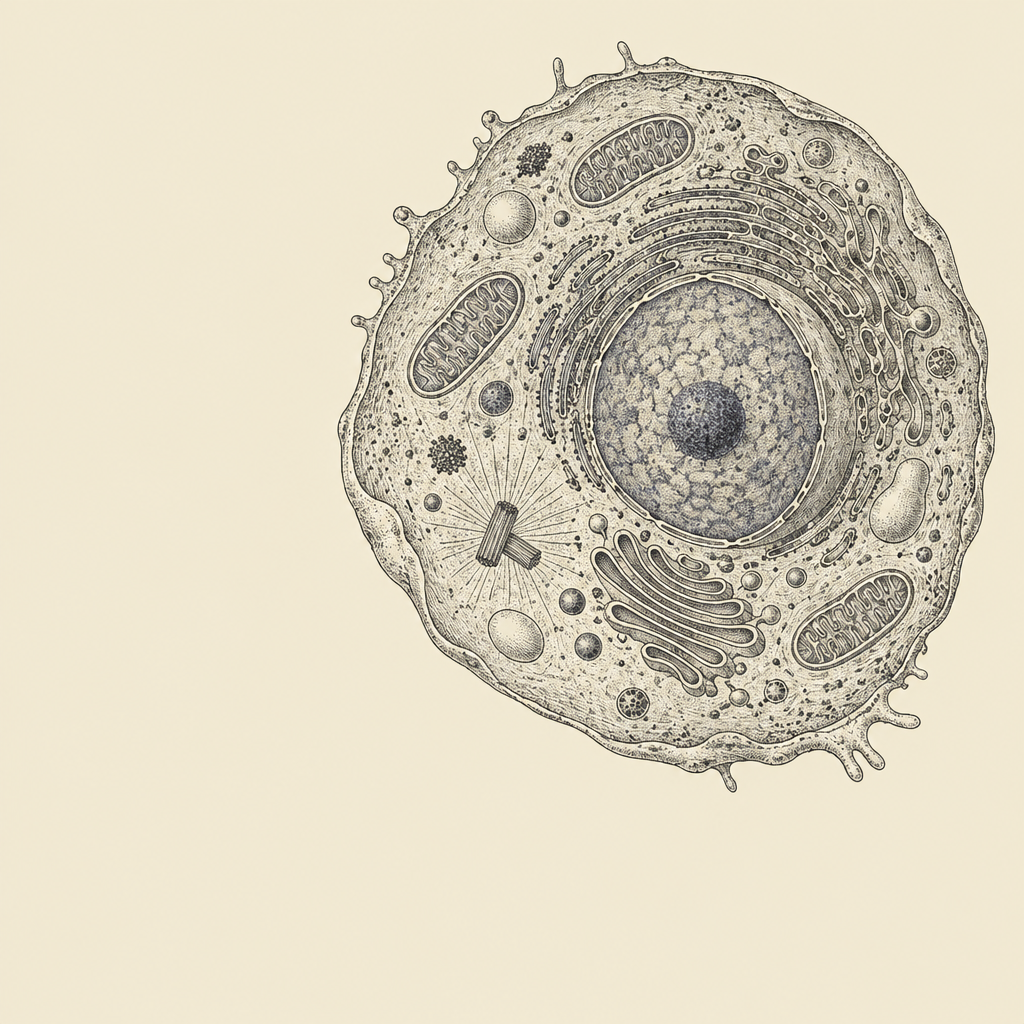
Fig. II  bioRxiv · Filed 29 Oct 2026.

Preprint fixes how automated cell labs pick experiments

Fix the measurement model first, argues a bioRxiv preprint on self-driving laboratories that experiment on living cells. A self-driving lab pairs automated experiments with an optimiser, the algorithm that reads each result and picks what to run next. The preprint proposes fixes to that optimiser, and its title says which comes first: correct how the system models its own measurements before tuning the rules it uses to choose experiments. Readouts from living cells are noisy, so the way an optimiser interprets each measurement affects every choice after it.

Read more →


Nº 03  —  Anthropic  —  Field report

Anthropic adds 20 partners to its AI for Science program

Fig. III  Anthropic · Filed 29 Oct 2026.

Anthropic adds 20 partners to its AI for Science program

Anthropic expanded its AI for Science program and highlighted 20 scientific foundations, institutions and research groups from around the world that it now partners with. The expansion comes alongside its in-house life sciences lab, so Anthropic is doing research itself while also adding outside partners. Because the list includes foundations and institutions as well as research groups, the program now reaches the organisations that fund and host science, not only the people doing it.

Read more →


Also Filed  ·  Three Briefs from the queue

Nº 04  —  bioRxiv  —  Field report

Preprint aims to make AI-run science checkable

Verifiable agent-run science on public infrastructure is the subject of a new bioRxiv preprint. Whether results produced by AI agents can be checked independently is one of the field's open questions.

Read →

Nº 05  —  arXiv  —  Computational biology

One learned force field models biomolecular complexes

One neural network potential handles the dynamics of biomolecular complexes at coarse-grained resolution, a new arXiv preprint reports. These potentials are machine-learned stand-ins for the physics force fields that drive molecular dynamics simulations.

Read →

Nº 06  —  arXiv  —  Field report

HGPRGDel ranks gene deletions for growth-coupled design

HGPRGDel, a new method described in an arXiv preprint, learns and ranks gene deletions for growth coupling. Its model takes into account gene-protein-reaction (GPR) rules, the logic linking genes to the metabolic reactions they enable.

Read →


· · ·

Reply with your discoveries. A human reads them. Forward freely.