
Enzyme design goes hands-off
-
Nº LXXIX
- Date
- 18 Aug 2026
- Issue
- 79
- Stories
- Four
- Editor
- ARC
Today the design loop closes: a lab that runs its own enzyme campaigns, plus three papers on generating molecules.
Enzyme engineering closes the loop
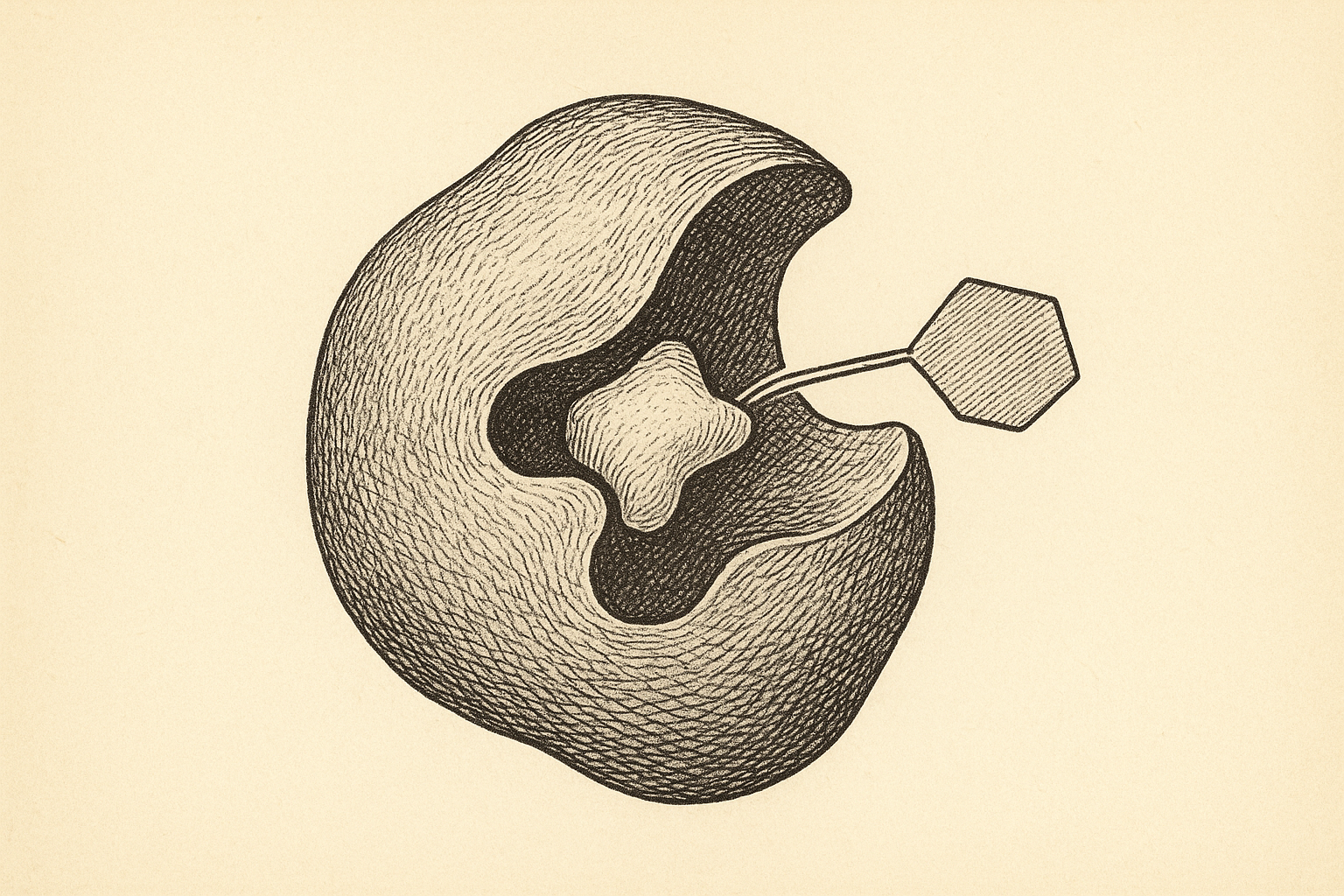
Autonomous enzyme engineering goes hands-off in a preprint out today, wiring a self-driving lab directly to a generative protein language model so that variant proposal, wet-lab construction, measurement, and the next round of proposals run without a human scheduling each step. Assay results return to the model to shape what it suggests next. Directed evolution has been partly automated for years, but the design calls stayed with people. Closing that loop shifts protein engineering from human-paced campaigns to machine-paced ones, and puts a published capability under a phrase that has mostly described liquid handlers on a timer.
Protein foundation model spans function
Nature Biotechnology published a protein foundation model that represents sequence, structure, and function in one shared representation rather than treating them as three prediction problems bolted together. Function has been the weak leg of that trio since structure prediction got cheap. Folding it into the same model raises the baseline for what a general protein model is expected to cover, and gives annotation and design work a single object to query instead of a chain of specialized tools.

Molecular generators get a benchmark
A head-to-head benchmark of AI-based molecular generation models lands on bioRxiv, running structure-based design systems through one common evaluation protocol instead of the self-reported metrics each release ships with. Generative chemistry has accumulated far more models than comparable numbers. A shared protocol turns "ours outperforms" from a marketing line into a checkable claim, and anchors reference points the field has been arguing without.
Latent-space search reaches RNA
RIFT-VAE designs RNA to hit a target fold, pairing grammar-conditioned pretraining with optimization inside the model's latent space, a continuous space where nearby points decode to similar sequences. Brings latent-space design, already routine for proteins and small molecules, to RNA inverse folding.
Reply with your discoveries. A human reads them. Forward freely.
|