
5 min read

Protein and ligand design drop the structure step
Protein and ligand design drop the structure step
Nº 01 · The Lede bioRxiv Structural biology · Protein design

Pallatom2 designs new proteins one atom at a time
Pallatom2 designs new proteins one atom at a time
Fig. IbioRxiv · Filed 13 Nov 2026.

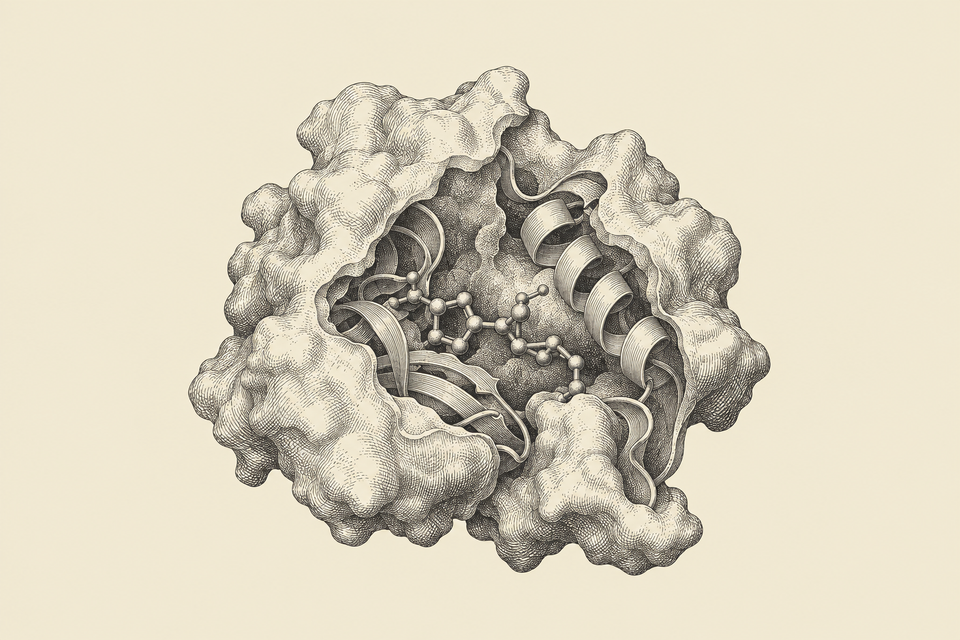
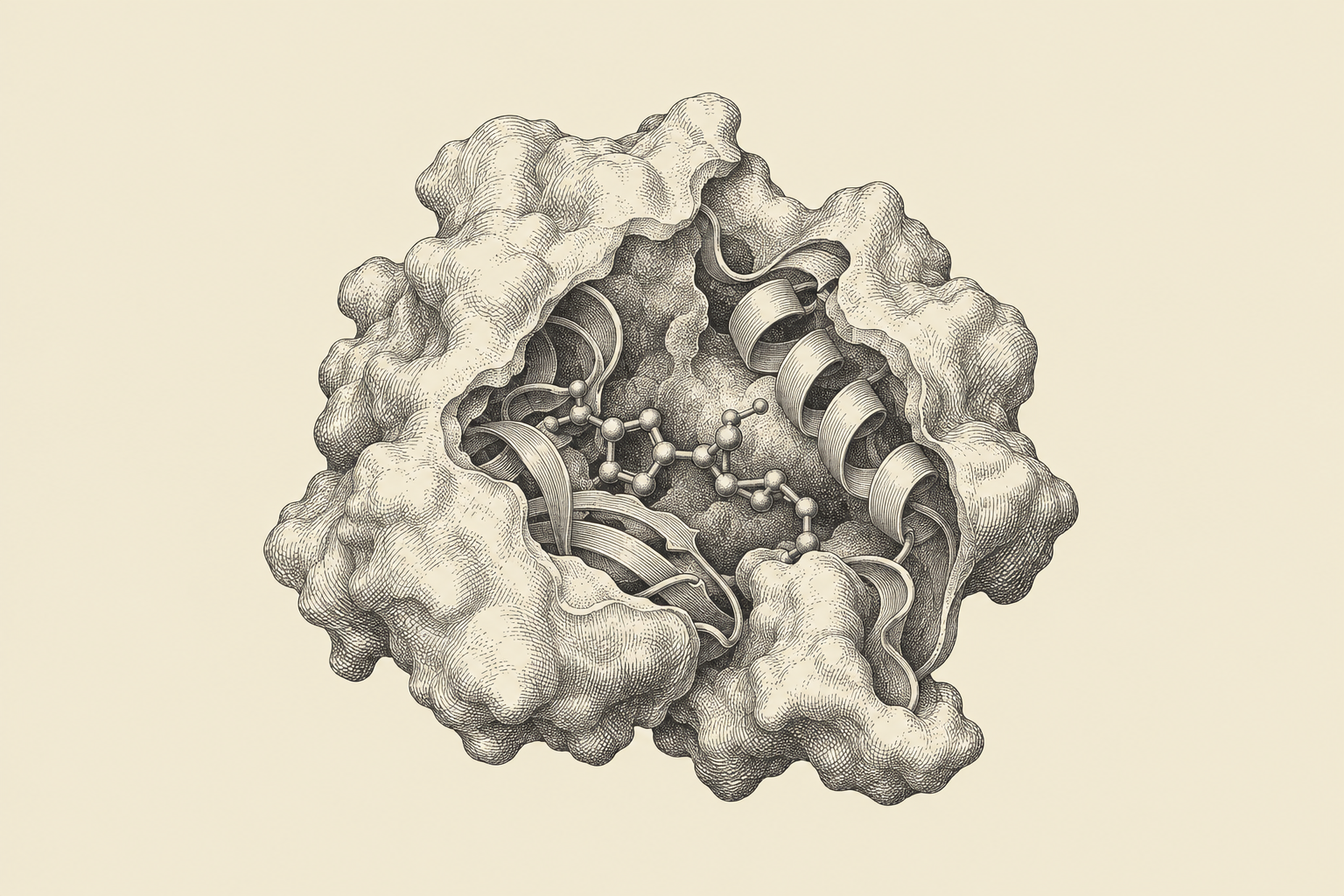
Pallatom2 models proteins atom-by-atom in a new bioRxiv preprint, generating de novo designs at the level of individual atoms rather than laying down a backbone first and then searching for a sequence that fits it. Most design pipelines still work in those two steps, which leaves the sequence stage stuck with whatever the backbone generator decided. Modeling both together lets side-chain chemistry influence the fold while the fold is still forming. All-atom generation is harder to train, because the model has to place a variable number of side-chain atoms per residue, which is part of why backbone-first pipelines persist. The authors present the method as a way into regions of protein space that backbone-first approaches rarely reach.
Read the source →

ProLigGPT designs ligands without a target's 3D structure
Fig. IIbioRxiv · Filed 13 Nov 2026.
Nº 02 bioRxiv Field report

ProLigGPT designs ligands without a target's 3D structure

ProLigGPT designs ligands for a protein target without needing that target's 3D structure, in a bioRxiv preprint. Most generative chemistry starts from a resolved or predicted binding pocket, so targets with neither are off the table, and a wrong predicted pocket passes its error straight through. Treating the problem as a language task over target and ligand sequences drops that requirement. The trade is giving up the geometric detail that makes pocket-conditioned output physically plausible in the first place.

Read more →
Review maps where general AI models' biology knowledge ends
Fig. IIIarXiv · Filed 13 Nov 2026.
Nº 03 arXiv Computational biology

Review maps where general AI models' biology knowledge ends

A new review sets out the limits of what general-purpose AI models actually know about biology, and what goes wrong once those models are wired into agents that run multi-step work on their own. An agent that chains ten tool calls carries every gap in its underlying model through each step, and the usual way to catch a gap (a wrong answer that looks wrong) fails when the output is a plausible figure. The arXiv paper is written for biologists rather than machine-learning audiences.

Read more →
Also Filed · One Brief from the queue
Nº 04 arXiv Field report

Model learns pediatric ECMO decisions from limited records

Reinforcement learning tunes pediatric ECMO settings in an arXiv paper, trained only on past clinical records and constrained to stay near decisions clinicians actually made. That constraint is what stops the model recommending settings no child in the data ever received.

Read →

Reply with your discoveries. A human reads them. Forward freely.

Agentic Discovery  ·  Nº 142  ·  13 Nov 2026

Editor's Note

Two generative design papers that skip a step, plus an honest accounting of what the models don't know.


Nº 01 · The Lede  —  bioRxiv  —  Structural biology · Protein design

Pallatom2 designs new proteins one atom at a time

Pallatom2 designs new proteins one atom at a time

Fig. I  bioRxiv · Filed 13 Nov 2026.

Pallatom2 models proteins atom-by-atom in a new bioRxiv preprint, generating de novo designs at the level of individual atoms rather than laying down a backbone first and then searching for a sequence that fits it. Most design pipelines still work in those two steps, which leaves the sequence stage stuck with whatever the backbone generator decided. Modeling both together lets side-chain chemistry influence the fold while the fold is still forming. All-atom generation is harder to train, because the model has to place a variable number of side-chain atoms per residue, which is part of why backbone-first pipelines persist. The authors present the method as a way into regions of protein space that backbone-first approaches rarely reach.

Read the source →

Why it matters

Generating all the atoms at once lets a design model handle side-chain chemistry and fold together, which backbone-first pipelines cannot do.


Nº 02  —  bioRxiv  —  Field report

ProLigGPT designs ligands without a target's 3D structure

Fig. II  bioRxiv · Filed 13 Nov 2026.

ProLigGPT designs ligands without a target's 3D structure

ProLigGPT designs ligands for a protein target without needing that target's 3D structure, in a bioRxiv preprint. Most generative chemistry starts from a resolved or predicted binding pocket, so targets with neither are off the table, and a wrong predicted pocket passes its error straight through. Treating the problem as a language task over target and ligand sequences drops that requirement. The trade is giving up the geometric detail that makes pocket-conditioned output physically plausible in the first place.

Read more →


Nº 03  —  arXiv  —  Computational biology

Review maps where general AI models' biology knowledge ends

Fig. III  arXiv · Filed 13 Nov 2026.

Review maps where general AI models' biology knowledge ends

A new review sets out the limits of what general-purpose AI models actually know about biology, and what goes wrong once those models are wired into agents that run multi-step work on their own. An agent that chains ten tool calls carries every gap in its underlying model through each step, and the usual way to catch a gap (a wrong answer that looks wrong) fails when the output is a plausible figure. The arXiv paper is written for biologists rather than machine-learning audiences.

Read more →


Also Filed  ·  One Brief from the queue

Nº 04  —  arXiv  —  Field report

Model learns pediatric ECMO decisions from limited records

Reinforcement learning tunes pediatric ECMO settings in an arXiv paper, trained only on past clinical records and constrained to stay near decisions clinicians actually made. That constraint is what stops the model recommending settings no child in the data ever received.

Read →


· · ·

Reply with your discoveries. A human reads them. Forward freely.