
5 min read

Claude enters the antibody design loop
Claude enters the antibody design loop
Nº 01 · The Lede bioRxiv Field report

Claude helps design an anti-IgE antibody for food allergy
Claude helps design an anti-IgE antibody for food allergy
Fig. IbioRxiv · Filed 12 Nov 2026.

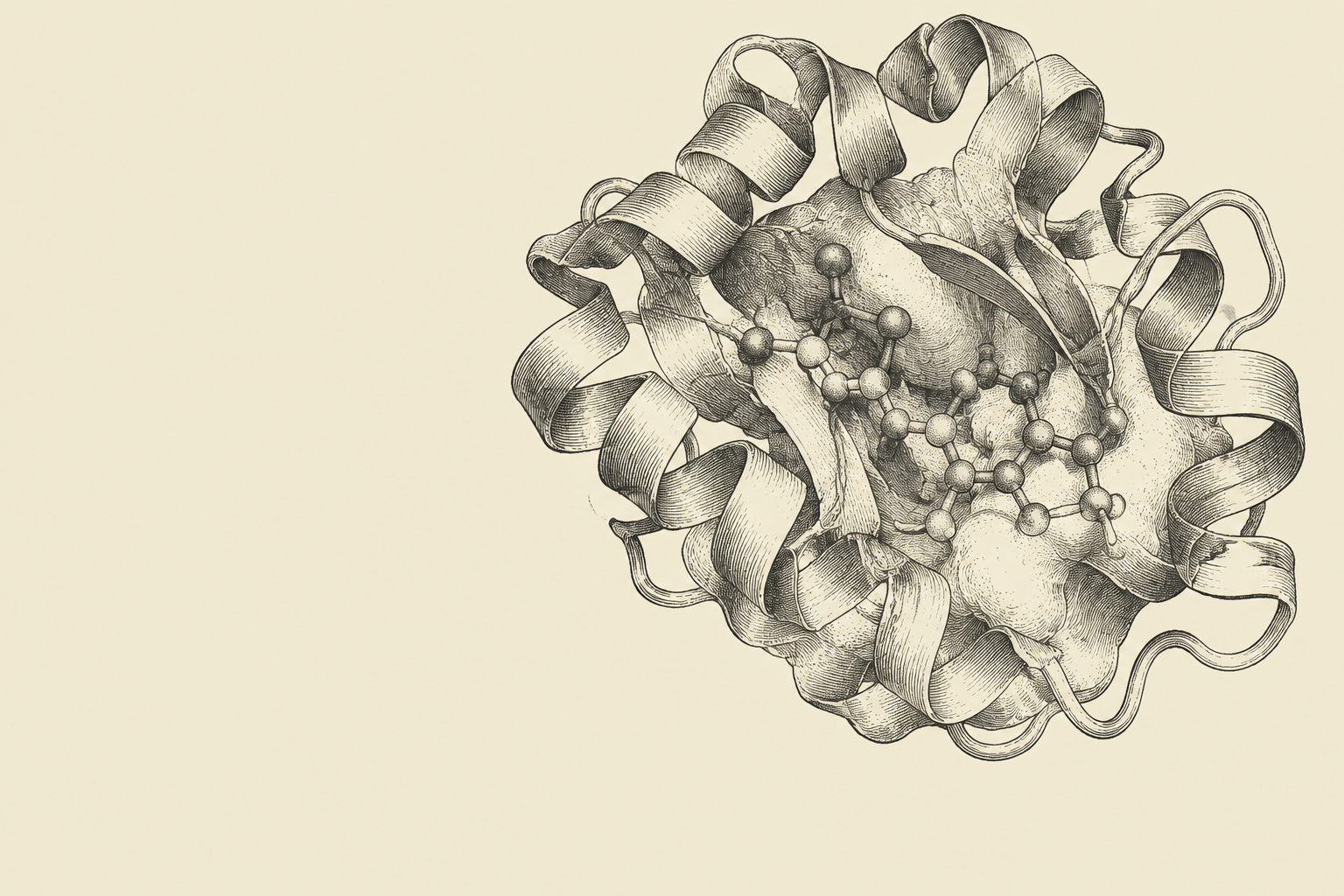
Claude helped design an antibody meant to disrupt IgE in food allergy, in a new bioRxiv preprint that calls the candidate best-in-class against existing IgE blockers. The design campaign ran on Claude, Anthropic's general-purpose language model, rather than a protein-specific design network trained only on sequences and structures. IgE blockade is an established clinical mechanism, so a model-assisted candidate here can be judged against drugs already given to patients instead of against a computational score. The preprint stops at the design and characterization stage, not clinical data.
Read the source →

ProTEUS scores single mutations to steer protein evolution
Fig. IIarXiv · Filed 12 Nov 2026.
Nº 02 arXiv Structural biology · Protein design

ProTEUS scores single mutations to steer protein evolution

ProTEUS models protein evolution one mutation at a time, in an arXiv preprint describing what its authors call a world model — a system that predicts the consequence of an action before the action is taken. Here the action is a point mutation and the prediction is the resulting change in the protein. Proposing variants and scoring them happen in the same system, so rounds of directed evolution can be planned in silico before anything reaches the bench.
Read more →
DE-Rigor-Agent audits assumptions in RNA-seq analysis
Fig. IIIbioRxiv · Filed 12 Nov 2026.
Nº 03 bioRxiv Agents · Infrastructure

DE-Rigor-Agent audits assumptions in RNA-seq analysis

An agent checks assumptions before running differential expression on bulk RNA-seq, in a bioRxiv preprint. DE-Rigor-Agent tests whether a dataset actually meets the conditions the chosen statistical model requires, then adapts the analysis when it doesn't, instead of returning a gene list regardless. Differential expression is among the most-run analyses in biology and among the most frequently run on defaults, so putting the assumption checks inside the workflow changes what counts as a finished result.

Read more →
Also Filed · One Brief from the queue
Nº 04 arXiv Structural biology · Protein design

ANTIOCH-VS screens from protein sequence to candidate hits

ANTIOCH-VS runs virtual screening end to end, taking a protein sequence and returning ranked hits through an open-source ensemble of structure and docking steps, per an arXiv preprint. It is pitched as modular: components can be swapped out without rebuilding the pipeline around them.

Read →

Reply with your discoveries. A human reads them. Forward freely.

Agentic Discovery  ·  Nº 141  ·  12 Nov 2026

Editor's Note

Four preprints today, and the throughline is agents taking over the parts of discovery people usually eyeball.


Nº 01 · The Lede  —  bioRxiv  —  Field report

Claude helps design an anti-IgE antibody for food allergy

Claude helps design an anti-IgE antibody for food allergy

Fig. I  bioRxiv · Filed 12 Nov 2026.

Claude helped design an antibody meant to disrupt IgE in food allergy, in a new bioRxiv preprint that calls the candidate best-in-class against existing IgE blockers. The design campaign ran on Claude, Anthropic's general-purpose language model, rather than a protein-specific design network trained only on sequences and structures. IgE blockade is an established clinical mechanism, so a model-assisted candidate here can be judged against drugs already given to patients instead of against a computational score. The preprint stops at the design and characterization stage, not clinical data.

Read the source →

Why it matters

Antibody campaigns against validated clinical targets are now being run with a general-purpose language model in the loop, not only with specialist protein-design models.


Nº 02  —  arXiv  —  Structural biology · Protein design

ProTEUS scores single mutations to steer protein evolution

Fig. II  arXiv · Filed 12 Nov 2026.

ProTEUS scores single mutations to steer protein evolution

ProTEUS models protein evolution one mutation at a time, in an arXiv preprint describing what its authors call a world model — a system that predicts the consequence of an action before the action is taken. Here the action is a point mutation and the prediction is the resulting change in the protein. Proposing variants and scoring them happen in the same system, so rounds of directed evolution can be planned in silico before anything reaches the bench.

Read more →


Nº 03  —  bioRxiv  —  Agents · Infrastructure

DE-Rigor-Agent audits assumptions in RNA-seq analysis

Fig. III  bioRxiv · Filed 12 Nov 2026.

DE-Rigor-Agent audits assumptions in RNA-seq analysis

An agent checks assumptions before running differential expression on bulk RNA-seq, in a bioRxiv preprint. DE-Rigor-Agent tests whether a dataset actually meets the conditions the chosen statistical model requires, then adapts the analysis when it doesn't, instead of returning a gene list regardless. Differential expression is among the most-run analyses in biology and among the most frequently run on defaults, so putting the assumption checks inside the workflow changes what counts as a finished result.

Read more →

The Bench NoteFrom Heureka Labs

Checking a count matrix against its model's assumptions is a procedure, and Bench has a place to write procedures down. A skill is a short file stating the dispersion and outlier checks a lab requires before any DE test, and ARC picks it up whenever a task calls for it. A custom sub-agent can hold a statistics reviewer's brief. Run Analysis saves the script beside the figures, so which tests ran stays readable afterward.


Also Filed  ·  One Brief from the queue

Nº 04  —  arXiv  —  Structural biology · Protein design

ANTIOCH-VS screens from protein sequence to candidate hits

ANTIOCH-VS runs virtual screening end to end, taking a protein sequence and returning ranked hits through an open-source ensemble of structure and docking steps, per an arXiv preprint. It is pitched as modular: components can be swapped out without rebuilding the pipeline around them.

Read →


· · ·

Reply with your discoveries. A human reads them. Forward freely.