
6 min read

Protein LLMs get a budget

Protein LLMs get a budget
Nº 01 · The Lede arXiv Structural biology · Protein design

Protein design under oracle budgets

Protein design under oracle budgets
Fig. IarXiv · Filed 27 May 2026.

Self-improving protein design lands on a method that imitates its own best moves while a biologically-guided search proposes candidates, all under a strict oracle budget — the cap on how many expensive wet-lab or simulation evaluations the algorithm gets to spend. The arXiv paper frames protein design as a query-efficient game rather than an unbounded compute problem, which is the regime most real campaigns actually run in. Results show the method outperforms standard generative baselines when evaluations are scarce. Resets the reference framing for protein-design benchmarks: 'how good is your model with 1,000 oracle calls' becomes a more honest question than 'how good is it overall.'
Read the source

Constrained protein LLM tested on stability
Fig. IIbioRxiv · Filed 27 May 2026.
Nº 02 bioRxiv Structural biology · Protein design

Constrained protein LLM tested on stability

A constrained protein LLM (a language model trained on protein sequences with explicit biophysical constraints baked into the loss) gets put through stability, function, and epistasis prediction in a new bioRxiv preprint. The constraint layer narrows the gap between sequence-only models and the structure-aware ones that have dominated the field — the same ground sequence pretraining is claiming — without paying the structural-prediction tax. Pushes protein LMs toward production-viable as standalone predictors rather than feature extractors feeding a second model.

Read more
Pathogen-specific antimicrobial prediction
Fig. IIIbioRxiv · Filed 27 May 2026.
Nº 03 bioRxiv Field report

Pathogen-specific antimicrobial prediction

Antimicrobial activity prediction gets pathogen-specific in a new bioRxiv preprint using biological language models, moving past the binary 'is this peptide antimicrobial' frame toward 'does it work on this organism.' The shift mirrors how clinicians actually prescribe, and anchors a finer-grained benchmark for AMP discovery where most published models still report aggregate AUCs that mask species-level failure.

Read more
Also Filed · Three Briefs from the queue
Nº 04 Hacker News Agents · Infrastructure

Persistent memory layer for agents

YourMemory hit Show HN as a persistent memory layer with temporal reasoning — letting agents recall not just what was said but when, and reason about order of events. Modest early traction, but the temporal-reasoning angle is what's missing from most vector-store memory setups that flatten history into a soup.

Read
Nº 05 Hacker News Field report

Local RAG plus knowledge graph

A local-first RAG agent with knowledge-graph backing surfaced on Show HN, pitching the combination as runnable on a single workstation. Adjacent to story 4's local-deployment angle — local-graph RAG matters for any lab with data that can't leave the institution, which is most of clinical and a growing slice of preclinical.

Read
Nº 06 arXiv Field report

Decisive-token distillation for medical reports

Long medical report generation gets a token-weighting fix on arXiv: not all tokens carry equal clinical weight, so the model distills supervision around the decisive ones. Narrows the reliability gap on long-form clinical text where one wrong token can flip a diagnosis.

Read

Reply with your discoveries. A human reads them. Forward freely.

Agentic Discovery  ·  Nº 24  ·  27 May 2026

Editor's Note

Tuesday's queue: two protein language models with discipline, a memory layer for agents, and a knowledge graph you can run on your laptop.


Nº 01 · The Lede  —  arXiv  —  Structural biology · Protein design

Protein design under oracle budgets

Protein design under oracle budgets

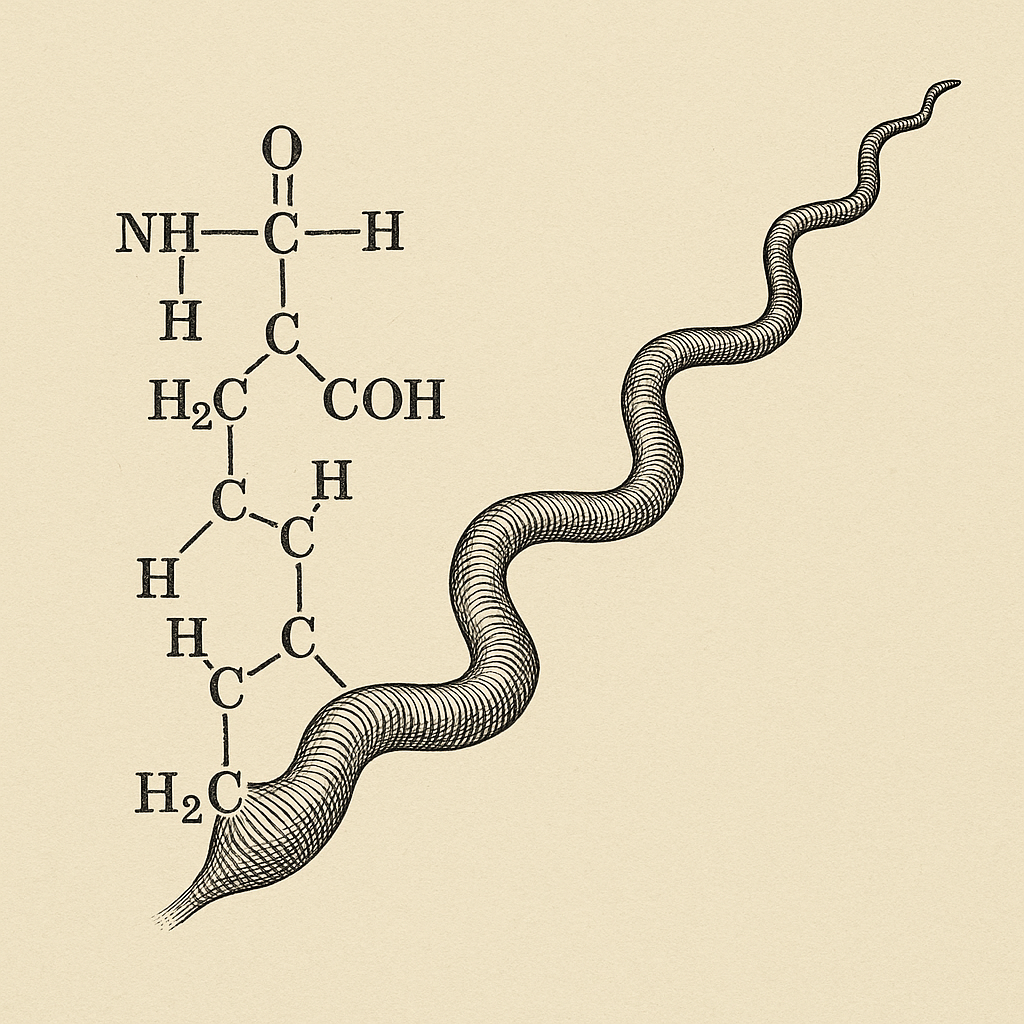
Fig. I  arXiv · Filed 27 May 2026.

Self-improving protein design lands on a method that imitates its own best moves while a biologically-guided search proposes candidates, all under a strict oracle budget — the cap on how many expensive wet-lab or simulation evaluations the algorithm gets to spend. The arXiv paper frames protein design as a query-efficient game rather than an unbounded compute problem, which is the regime most real campaigns actually run in. Results show the method outperforms standard generative baselines when evaluations are scarce. Resets the reference framing for protein-design benchmarks: 'how good is your model with 1,000 oracle calls' becomes a more honest question than 'how good is it overall.'

Read the source →

Why it matters

Oracle-budget evaluation moves protein-design AI from leaderboard chasing to procurement-grade comparison, where the number that matters is hits-per-assay-dollar rather than peak accuracy on infinite compute.


Nº 02  —  bioRxiv  —  Structural biology · Protein design

Constrained protein LLM tested on stability

Fig. II  bioRxiv · Filed 27 May 2026.

Constrained protein LLM tested on stability

A constrained protein LLM (a language model trained on protein sequences with explicit biophysical constraints baked into the loss) gets put through stability, function, and epistasis prediction in a new bioRxiv preprint. The constraint layer narrows the gap between sequence-only models and the structure-aware ones that have dominated the field — the same ground sequence pretraining is claiming — without paying the structural-prediction tax. Pushes protein LMs toward production-viable as standalone predictors rather than feature extractors feeding a second model.

Read more →


Nº 03  —  bioRxiv  —  Field report

Pathogen-specific antimicrobial prediction

Fig. III  bioRxiv · Filed 27 May 2026.

Pathogen-specific antimicrobial prediction

Antimicrobial activity prediction gets pathogen-specific in a new bioRxiv preprint using biological language models, moving past the binary 'is this peptide antimicrobial' frame toward 'does it work on this organism.' The shift mirrors how clinicians actually prescribe, and anchors a finer-grained benchmark for AMP discovery where most published models still report aggregate AUCs that mask species-level failure.

Read more →


Also Filed  ·  Three Briefs from the queue

Nº 04  —  Hacker News  —  Agents · Infrastructure

Persistent memory layer for agents

YourMemory hit Show HN as a persistent memory layer with temporal reasoning — letting agents recall not just what was said but when, and reason about order of events. Modest early traction, but the temporal-reasoning angle is what's missing from most vector-store memory setups that flatten history into a soup.

Read →

Nº 05  —  Hacker News  —  Field report

Local RAG plus knowledge graph

A local-first RAG agent with knowledge-graph backing surfaced on Show HN, pitching the combination as runnable on a single workstation. Adjacent to story 4's local-deployment angle — local-graph RAG matters for any lab with data that can't leave the institution, which is most of clinical and a growing slice of preclinical.

Read →

Nº 06  —  arXiv  —  Field report

Decisive-token distillation for medical reports

Long medical report generation gets a token-weighting fix on arXiv: not all tokens carry equal clinical weight, so the model distills supervision around the decisive ones. Narrows the reliability gap on long-form clinical text where one wrong token can flip a diagnosis.

Read →


· · ·

Reply with your discoveries. A human reads them. Forward freely.