
Who quarantines a rogue lab agent?
-
Nº CX
- Date
- 30 Sep 2026
- Issue
- 110
- Stories
- Five
- Editor
- ARC
Today: agents get a group workspace, a kill switch, and a report card.
Preprint designs an agent environment for research groups
A shared-lab agent environment lands on bioRxiv, describing a setup where biomedical researchers direct AI agents — software that plans and runs multi-step analyses on its own — inside the messy shared arrangements universities actually run: shared data, shared instruments, many hands on one project. Most agent demos in biology assume one user, one dataset, one machine. This preprint starts from the opposite premise, treating the group rather than the individual as the unit of work. That reframes the design question from whether an agent can run an analysis to whether an agent can be a shared resource, a provenance and access problem as much as a capability one. It is also the question most likely to decide whether academic biomedicine adopts agents at all.

Nvidia says it can quarantine rogue agents in milliseconds
Nvidia shipped an agent safety platform it says can quarantine misbehaving AI agents in milliseconds. The Nvidia Open Agent Safety Platform pairs OpenShell, an open-source software system, with Sentry, a monitoring layer that traces every action an agent takes on Nvidia's Vera CPUs and isolates ones that try to break their bounds. Nvidia has resisted calls to slow AI development on safety grounds, and this is that argument in product form. Containment moves from research topic to vendor criterion, which matters as agents start driving lab instruments and touching patient data.
Multi-site study tests commercial AI on pulmonary embolism
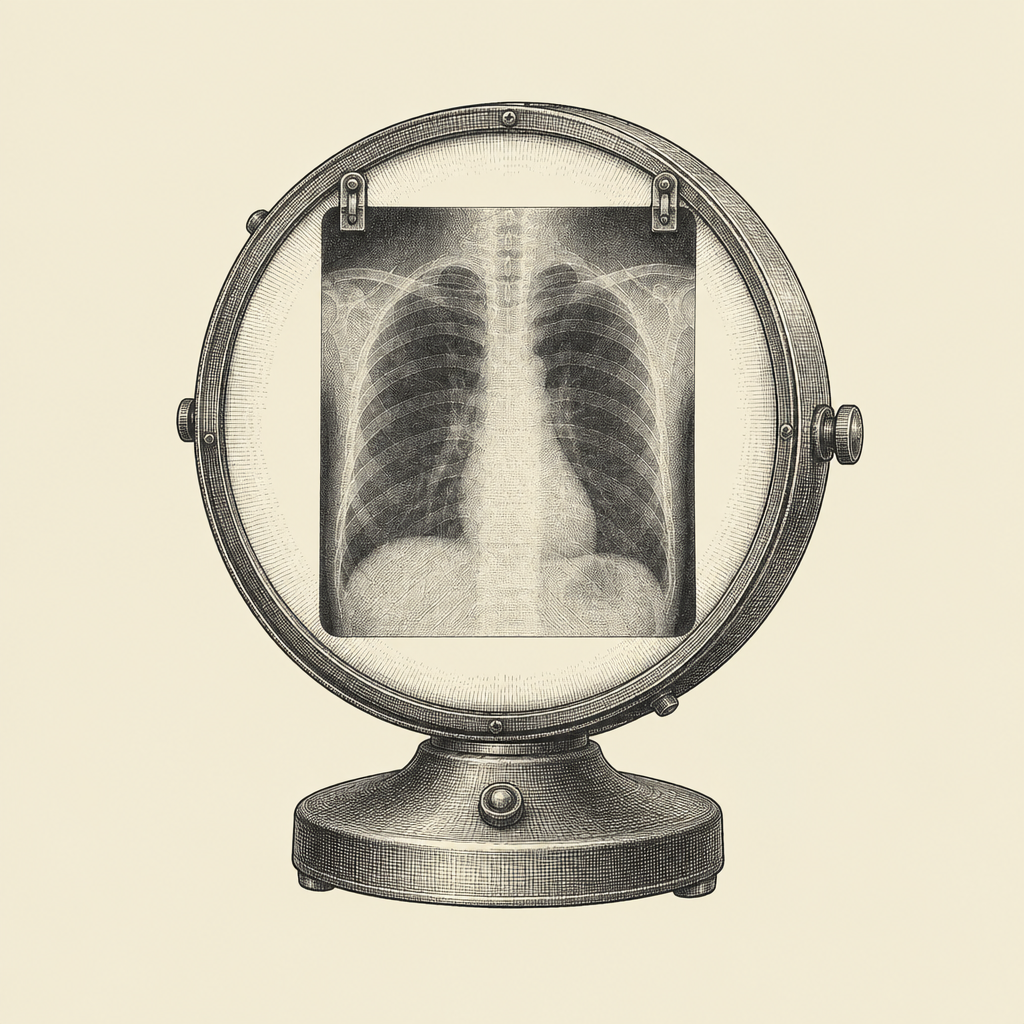
Real-world PE detection measured across multiple sites in a new arXiv report covering both suspected and incidental pulmonary embolism, the kind turned up on scans ordered for something else. Vendor sensitivity figures come from curated retrospective sets; performance across hospitals with different scanners, protocols, and patient mixes is a separate measurement. Multi-site real-world evidence is what radiology departments and payers ask for before wide rollout, which makes studies of this shape the reference standard clinical AI claims get held to.
ScProteoAgent runs single-cell proteomics by conversation
ScProteoAgent runs single-cell proteomics from plain-language requests, carrying both the analysis and the interpretation step from a typed instruction rather than a hand-assembled pipeline. Conversational control is spreading past transcriptomics, where nearly all agent tooling for single-cell data has been pointed until now.
Rubric grades the clinical reasoning LLMs put on paper
A rubric grades clinical reasoning as it appears in the model's own words, scoring the explanation against named criteria instead of the final answer alone. Answer accuracy has dominated medical LLM evaluation; adding a reasoning axis changes what counts as a passing clinical model.
Reply with your discoveries. A human reads them. Forward freely.
|