
6 min read

Washington aims at the trial bottleneck

Washington aims at the trial bottleneck
Nº 01 · The Lede Axios Clinical AI · Evaluation

Federal agencies move to shorten clinical trials

Federal agencies move to shorten clinical trials
Fig. IAxios · Filed 01 Oct 2026.

HHS is launching an effort to reimagine how clinical trials are designed, with the stated goal of drastically cutting the time and money it takes to develop a drug. Health Secretary Robert F. Kennedy Jr. and ARPA-H (Advanced Research Projects Agency for Health) Director Alicia Jackson are unveiling the program in Austin, with CMS Administrator Mehmet Oz and FDA leadership attached. Axios, which got the plan first, frames it as a possible template for reconfiguring drug development and lifting U.S. competitiveness in global biotech. The timing matters for where the bottleneck now sits: computational design has compressed the discovery end hard while trial timelines have barely moved, so a federal redesign resets the cost ceiling that in-silico gains currently run into.

Read the source →

Language models forecast which drug targets will succeed
Fig. IIbioRxiv · Filed 01 Oct 2026.
Nº 02 bioRxiv Drug discovery · Computational

Language models forecast which drug targets will succeed

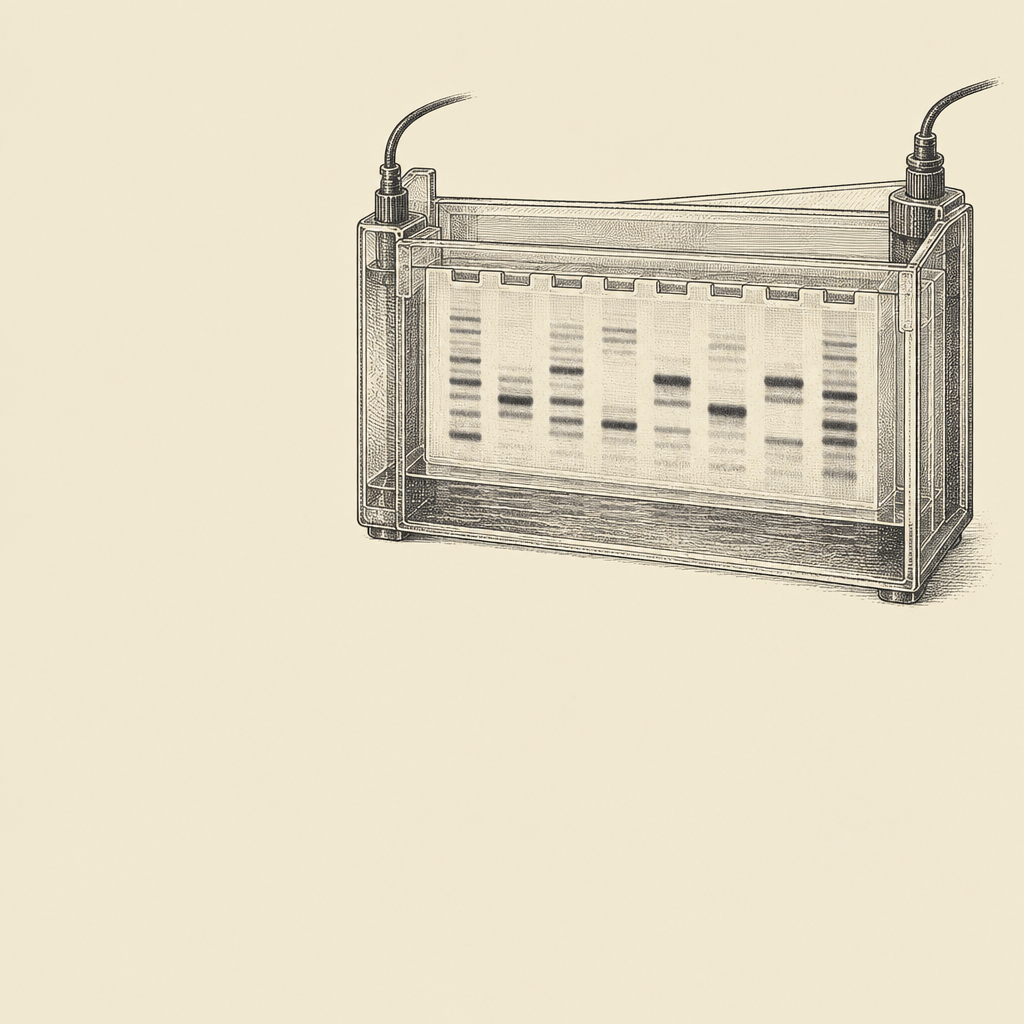
Language-model rationales forecast which target-indication pairs survive the clinic, and a new bioRxiv preprint reports that the predictions hold when the usual shortcuts are blocked. Success models of this kind are notoriously easy to inflate — a risk RepurposingBench addressed: literature published after a trial reads the answer back into training. Building explicit biological rationales and testing them under leakage-resistant splits makes portfolio-level prediction defensible rather than suggestive, and gives the field a reference protocol for separating genuine prior knowledge from hindsight.
Read more →
An AI agent finds a DNA-trimming design method
Fig. IIIarXiv · Filed 01 Oct 2026.
Nº 03 arXiv Agents · Infrastructure

An AI agent finds a DNA-trimming design method

An AI agent derived a deletion-only DNA designer, running the multi-step search on its own: the method improves sequences by cutting bases rather than writing new ones, and each step of the search is logged as an inspectable record. The arXiv paper puts that audit trail at the center, so the discovery can be checked rather than trusted. That is the harder half of autonomous discovery. Generating a candidate method is now routine; making the path to it reviewable is what sequence-design claims from agents will need before they travel past the preprint stage.

Read more →
Also Filed · Two Briefs from the queue
Nº 04 bioRxiv Structural biology · Protein design

Fixed scaffolds cut failures in AI protein design

Scaffold constraints fix failure modes in computational protein engineering, a bioRxiv preprint reports, holding generated designs to a fixed structural core instead of letting them drift. Narrows the gap between generative output and sequences that actually fold and function as intended.

Read →
Nº 05 arXiv Computational biology

BioASQ posts its fourteenth round of biomedical scores

BioASQ reported results from its fourteenth challenge on biomedical semantic indexing and question answering, the longest-running shared test in the field. Fourteen rounds of comparable scores keep it the reference point for whether general-purpose models have caught purpose-built biomedical systems.

Read →

Reply with your discoveries. A human reads them. Forward freely.

Agentic Discovery  ·  Nº 111  ·  01 Oct 2026

Editor's Note

Federal attention finally lands on the slow end of the pipeline, where discovery-stage AI gains go to die.


Nº 01 · The Lede  —  Axios  —  Clinical AI · Evaluation

Federal agencies move to shorten clinical trials

Federal agencies move to shorten clinical trials

Fig. I  Axios · Filed 01 Oct 2026.

HHS is launching an effort to reimagine how clinical trials are designed, with the stated goal of drastically cutting the time and money it takes to develop a drug. Health Secretary Robert F. Kennedy Jr. and ARPA-H (Advanced Research Projects Agency for Health) Director Alicia Jackson are unveiling the program in Austin, with CMS Administrator Mehmet Oz and FDA leadership attached. Axios, which got the plan first, frames it as a possible template for reconfiguring drug development and lifting U.S. competitiveness in global biotech. The timing matters for where the bottleneck now sits: computational design has compressed the discovery end hard while trial timelines have barely moved, so a federal redesign resets the cost ceiling that in-silico gains currently run into.

Read the source →

Why it matters

Trial design becoming an explicit federal engineering target moves the binding constraint in drug development from molecule discovery to clinical execution, which makes trial-stage modeling, not another binder generator, the place AI's next big savings have to come from.


Nº 02  —  bioRxiv  —  Drug discovery · Computational

Language models forecast which drug targets will succeed

Fig. II  bioRxiv · Filed 01 Oct 2026.

Language models forecast which drug targets will succeed

Language-model rationales forecast which target-indication pairs survive the clinic, and a new bioRxiv preprint reports that the predictions hold when the usual shortcuts are blocked. Success models of this kind are notoriously easy to inflate — a risk RepurposingBench addressed: literature published after a trial reads the answer back into training. Building explicit biological rationales and testing them under leakage-resistant splits makes portfolio-level prediction defensible rather than suggestive, and gives the field a reference protocol for separating genuine prior knowledge from hindsight.

Read more →


Nº 03  —  arXiv  —  Agents · Infrastructure

An AI agent finds a DNA-trimming design method

Fig. III  arXiv · Filed 01 Oct 2026.

An AI agent finds a DNA-trimming design method

An AI agent derived a deletion-only DNA designer, running the multi-step search on its own: the method improves sequences by cutting bases rather than writing new ones, and each step of the search is logged as an inspectable record. The arXiv paper puts that audit trail at the center, so the discovery can be checked rather than trusted. That is the harder half of autonomous discovery. Generating a candidate method is now routine; making the path to it reviewable is what sequence-design claims from agents will need before they travel past the preprint stage.

Read more →


Also Filed  ·  Two Briefs from the queue

Nº 04  —  bioRxiv  —  Structural biology · Protein design

Fixed scaffolds cut failures in AI protein design

Scaffold constraints fix failure modes in computational protein engineering, a bioRxiv preprint reports, holding generated designs to a fixed structural core instead of letting them drift. Narrows the gap between generative output and sequences that actually fold and function as intended.

Read →

Nº 05  —  arXiv  —  Computational biology

BioASQ posts its fourteenth round of biomedical scores

BioASQ reported results from its fourteenth challenge on biomedical semantic indexing and question answering, the longest-running shared test in the field. Fourteen rounds of comparable scores keep it the reference point for whether general-purpose models have caught purpose-built biomedical systems.

Read →


· · ·

Reply with your discoveries. A human reads them. Forward freely.