
6 min read

A drug company with no humans in it
A drug company with no humans in it
Nº 01 · The Lede X Agents · Infrastructure

Thousands of AI agents run a virtual biotech

Thousands of AI agents run a virtual biotech
Fig. IX · Filed 22 Sep 2026.

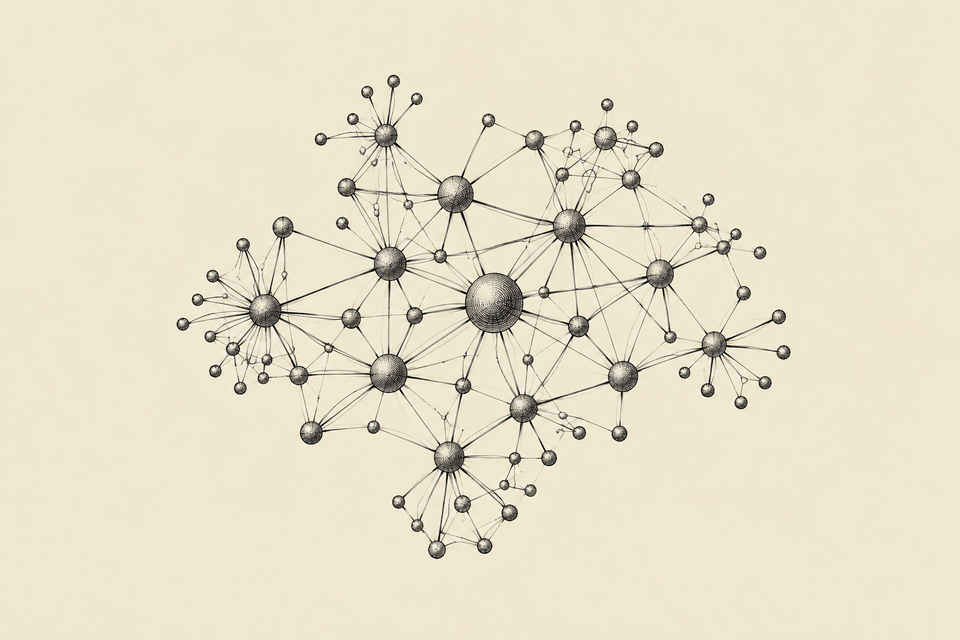
A virtual biotech staffed by AI scientist agents has been put to work on drug discovery at organizational scale, per a widely shared summary: thousands of agents predicting clinical trial success and independently designing candidates. Validation details are thin in the post itself, which is the caveat to hold onto. But the framing lands. The unit of AI contribution moves from one model answering one question to an org chart of agents carrying a program end to end. That changes the question in drug discovery from whether a model can do a task to what a research organization made of software actually produces.
Read the source →

Cell publishes an AI-agent-curated single-cell dataset
Fig. IIX · Filed 22 Sep 2026.
Nº 02 X Cell biology · Funding

Cell publishes an AI-agent-curated single-cell dataset

Cell devoted an issue to AI and biology, carrying several Arc Institute papers: State, a model that predicts how cells respond to perturbation; scBaseCount, a single-cell dataset assembled by an AI agent rather than by hand; and results from the Virtual Cell Challenge. Agent-assembled data clearing peer review at Cell moves agent-curated resources from convenience to citable infrastructure, and hands the virtual-cell effort a reference venue for its benchmarks.

Read more →
TRACEDD shows its work when designing drugs
Fig. IIIbioRxiv · Filed 22 Sep 2026.
Nº 03 bioRxiv Drug discovery · Computational

TRACEDD shows its work when designing drugs

TRACEDD grounds drug design in explicit tool calls, coordinating multiple agents so each design step carries the external computation that justified it. Explainability has been the soft spot in generative chemistry — grounding every decision in a named tool output turns "the model suggested it" into an auditable chain, which is the form medicinal-chemistry review actually accepts.

Read more →
Also Filed · Five Briefs from the queue
Nº 04 arXiv Clinical AI · Evaluation

MedRSI lets a clinical agent rewrite itself

Medical agents improve themselves in MedRSI (recursive self-improvement), where a clinical agent evolves its own strategies under constraints meant to keep the changes clinically aligned. Self-modifying systems in medicine put the oversight question ahead of the capability question.

Read →
Nº 05 arXiv Clinical AI · Evaluation

Ascent analyzes clinical data through a tool standard

Ascent queries real-world clinical data over MCP (Model Context Protocol, a shared spec for letting agents call outside tools and data sources). Standardized plumbing means clinical-data agents stop being one-off builds tied to a single warehouse.

Read →
Nº 06 Anthropic Benchmarks · Evaluation

Anthropic and Accenture fund outside model evaluation

Anthropic partnered with Accenture on independent evaluation of frontier models, with both sides expecting to invest at least $1 billion over five years to build capacity. External evaluation at that scale becomes an industry fixture, and the evidence base regulated medical uses will eventually have to cite.

Read →
Nº 07 bioRxiv Clinical AI · Evaluation

Benchmark compares biomedical models on messy clinical text

Biomedical language models benchmarked head-to-head on concept normalization — mapping real-world clinical phrasing onto controlled vocabularies. Gives the field a published reference point for a step that quietly sits under most EHR-derived analysis.

Read →
Nº 08 OpenAI Agents · Infrastructure

OpenAI's V7 gives agents a company's memory

V7 gives agents institutional memory turning scattered company files into source-linked context for multi-step work, built on OpenAI's GPT-5.6. The same retrieval problem blocks agents from reasoning over years of accumulated protocols, assay reports, and internal data.

Read →

Reply with your discoveries. A human reads them. Forward freely.

Agentic Discovery  ·  Nº 104  ·  22 Sep 2026

Editor's Note

Cell gives agent-curated data a real venue, and somebody staffed a whole biotech with agents.


Nº 01 · The Lede  —  X  —  Agents · Infrastructure

Thousands of AI agents run a virtual biotech

Thousands of AI agents run a virtual biotech

Fig. I  X · Filed 22 Sep 2026.

A virtual biotech staffed by AI scientist agents has been put to work on drug discovery at organizational scale, per a widely shared summary: thousands of agents predicting clinical trial success and independently designing candidates. Validation details are thin in the post itself, which is the caveat to hold onto. But the framing lands. The unit of AI contribution moves from one model answering one question to an org chart of agents carrying a program end to end. That changes the question in drug discovery from whether a model can do a task to what a research organization made of software actually produces.

Read the source →

Why it matters

The "AI scientist" stops being a single tool and becomes an operating structure, which puts program throughput rather than benchmark scores at the center of how AI-driven discovery gets judged.


Nº 02  —  X  —  Cell biology · Funding

Cell publishes an AI-agent-curated single-cell dataset

Fig. II  X · Filed 22 Sep 2026.

Cell publishes an AI-agent-curated single-cell dataset

Cell devoted an issue to AI and biology, carrying several Arc Institute papers: State, a model that predicts how cells respond to perturbation; scBaseCount, a single-cell dataset assembled by an AI agent rather than by hand; and results from the Virtual Cell Challenge. Agent-assembled data clearing peer review at Cell moves agent-curated resources from convenience to citable infrastructure, and hands the virtual-cell effort a reference venue for its benchmarks.

Read more →


Nº 03  —  bioRxiv  —  Drug discovery · Computational

TRACEDD shows its work when designing drugs

Fig. III  bioRxiv · Filed 22 Sep 2026.

TRACEDD shows its work when designing drugs

TRACEDD grounds drug design in explicit tool calls, coordinating multiple agents so each design step carries the external computation that justified it. Explainability has been the soft spot in generative chemistry — grounding every decision in a named tool output turns "the model suggested it" into an auditable chain, which is the form medicinal-chemistry review actually accepts.

Read more →


Also Filed  ·  Five Briefs from the queue

Nº 04  —  arXiv  —  Clinical AI · Evaluation

MedRSI lets a clinical agent rewrite itself

Medical agents improve themselves in MedRSI (recursive self-improvement), where a clinical agent evolves its own strategies under constraints meant to keep the changes clinically aligned. Self-modifying systems in medicine put the oversight question ahead of the capability question.

Read →

Nº 05  —  arXiv  —  Clinical AI · Evaluation

Ascent analyzes clinical data through a tool standard

Ascent queries real-world clinical data over MCP (Model Context Protocol, a shared spec for letting agents call outside tools and data sources). Standardized plumbing means clinical-data agents stop being one-off builds tied to a single warehouse.

Read →

Nº 06  —  Anthropic  —  Benchmarks · Evaluation

Anthropic and Accenture fund outside model evaluation

Anthropic partnered with Accenture on independent evaluation of frontier models, with both sides expecting to invest at least $1 billion over five years to build capacity. External evaluation at that scale becomes an industry fixture, and the evidence base regulated medical uses will eventually have to cite.

Read →

Nº 07  —  bioRxiv  —  Clinical AI · Evaluation

Benchmark compares biomedical models on messy clinical text

Biomedical language models benchmarked head-to-head on concept normalization — mapping real-world clinical phrasing onto controlled vocabularies. Gives the field a published reference point for a step that quietly sits under most EHR-derived analysis.

Read →

Nº 08  —  OpenAI  —  Agents · Infrastructure

OpenAI's V7 gives agents a company's memory

V7 gives agents institutional memory turning scattered company files into source-linked context for multi-step work, built on OpenAI's GPT-5.6. The same retrieval problem blocks agents from reasoning over years of accumulated protocols, assay reports, and internal data.

Read →


· · ·

Reply with your discoveries. A human reads them. Forward freely.