
A report card for autonomous discovery

-
Nº CXX
- Date
- 14 Oct 2026
- Issue
- 120
- Stories
- Five
- Editor
- ARC
A shared exam for agents that claim to do science, plus plumbing for data that can't wander.
A new benchmark tests agents on autonomous discovery

A new benchmark grades AI agents on whole discovery runs, not isolated question answering. Autonomous Science Bench, from a group led by Yibo Wen, evaluates agents on the multi-step work scientific discovery actually requires. Claims about software that "does science" have mostly rested on curated demos, with each group picking its own tasks and declaring success. A shared test changes what those claims have to survive. For biology, where most agent results so far come from one group running one pipeline, it supplies a common yardstick for how far an autonomous system sits from producing usable research.
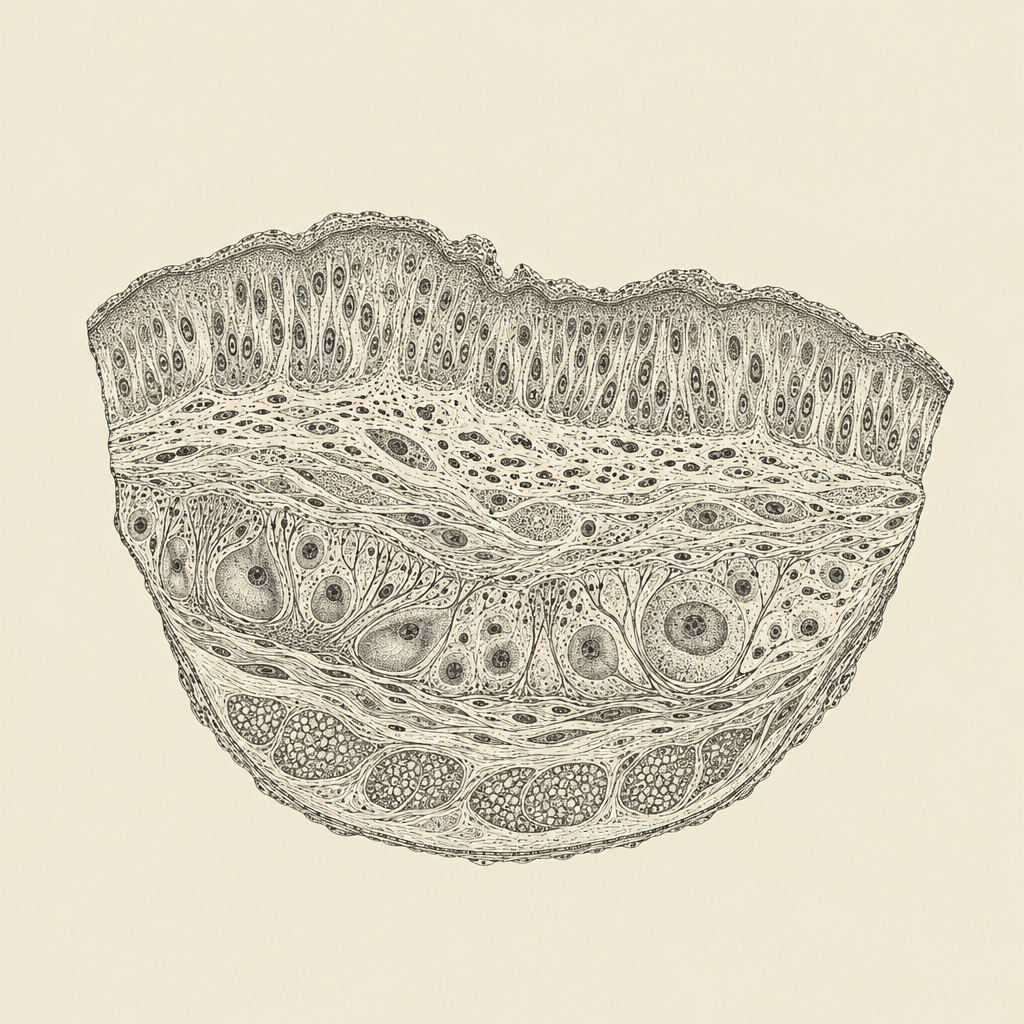
One model links tissue images to spatial gene programs
A multimodal model links histology to spatial molecular programs, learning a shared representation across stained tissue images and the molecular measurements taken from the same tissue. It's a foundation model, trained broadly rather than built for one assay, which is how this class of work has been scaling in pathology. The direction is what counts: decades of archived slides sit in hospital storage with no molecular data attached, and bridging the two changes what those archives are worth as a discovery resource.

Consus launches an LLM gateway for sensitive data
Consus launched an LLM gateway aimed at organizations that can't hand data freely to model providers, pitched on Hacker News as plumbing between internal applications and outside models. A gateway puts a controlled layer in the request path; the model calls themselves still run at whichever provider sits behind it, so what it governs is routing and policy, not where inference happens. Regulated data has been the main blocker on LLM use in clinical and trial settings, and that blocker is hardening into a product category instead of a bespoke build every time.
MFG optimizes molecules over multiple feedback rounds
MFG optimizes molecules across multiple rounds of feedback rather than one-shot generation, revising candidates as scores come back. The framing moves generative chemistry closer to the design-make-test loop, where iterative improvement, not single-batch hit rate, is the measure that counts.
BioMod groups genes into modules for single-cell models
BioMod tokenizes gene modules instead of individual genes, giving single-cell models a vocabulary of biological programs as the basic unit they read. Pathway-level units make the model's internal groupings legible in terms the field already uses, which is where interpretability arguments in single-cell AI keep stalling.
Reply with your discoveries. A human reads them. Forward freely.
|