
Virtual embryos and computer-using agents
-
Nº XLIV
- Date
- 26 Jun 2026
- Issue
- 44
- Stories
- Seven
- Editor
- ARC
A virtual embryo, a computer-using Gemini, and DeepSeek Flash quietly flipping agent economics — Thursday earns its bandwidth.
Navigo aims at virtual embryo
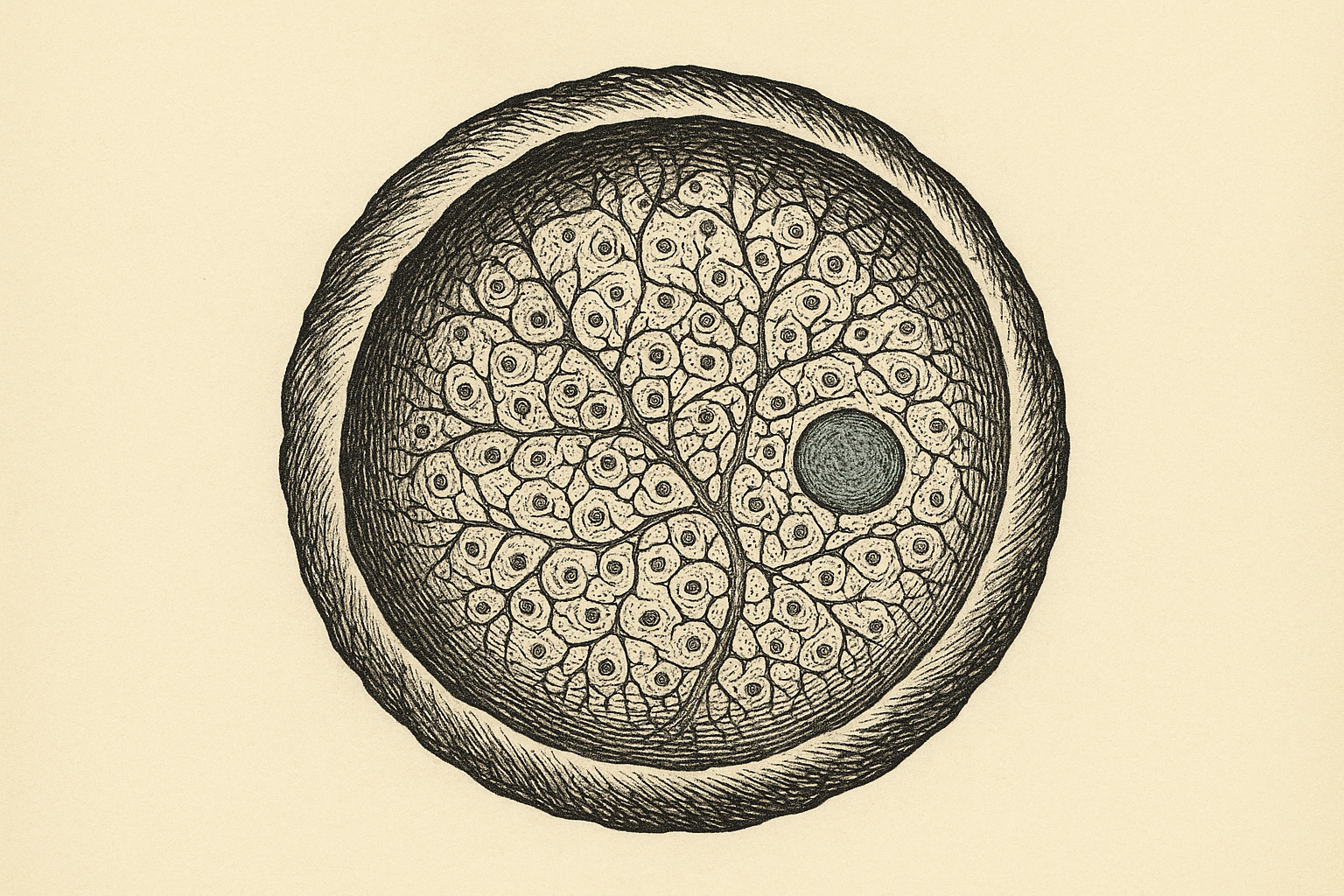
Navigo couples flow matching at the population level with RNA kinetics modeling at the molecular level, sketching the first concrete pass at an AI-powered virtual embryo from Xiaojie Qiu's group. Flow matching (a generative technique that learns trajectories between distributions rather than single endpoints) lets the model interpolate developmental states; the kinetics layer ties those states to mRNA production and decay. Resets the reference target for developmental-biology AI: virtual cells now have a virtual-embryo north star, and the field gets a concrete artifact to benchmark against instead of slideware.
Gemini gains native computer use
Google DeepMind shipped Gemini 3.5 Flash with native computer use, letting developers build agents that see and act across browsers, mobile, and desktop without bolt-on screen-scraping layers. Raises the floor for agent platforms: GUI control becomes a base-model feature, not a separate vendor stack — which matters for lab software, ELNs, and instrument interfaces that never got proper APIs and still expect a human at the mouse.

DeepSeek Flash flips agent economics
DeepSeek Flash inverted the cost curve for browser agents, according to a writeup from rtrvr.ai running text-only plans against full multimodal stacks. The pitch: cheap, fast tokens make code-as-plan competitive with vision-heavy approaches. Collapses the per-task cost ceiling for high-volume agent workloads — including the literature-mining and database-trawling jobs biology runs at scale.
LLMs formalize cell-type calls
NanoCellAnnotator structures expert cell-type annotation through LLMs, turning the hand-curated calls that anchor every scRNA-seq paper into a reproducible pipeline. Moves single-cell annotation from artisanal to auditable — narrows one of the loudest reproducibility gaps in single-cell biology.
Socratic agents probe physical systems
Socratic agents tackle autonomous discovery in high-dimensional physical systems, using question-driven loops to surface structure base agents miss. Advances the methodology of autonomous discovery itself — the same loop transfers to biophysics and high-dimensional omics, where the search space looks similar.
Discovery as meta-optimization
A new arXiv paper frames scientific discovery as meta-optimization, using combinatorial optimization as the test case. Anchors a counterpoint to pure-LLM discovery pipelines: structured search still earns its keep, and the debate over how much reasoning belongs in the model versus the loop gets a concrete reference point.
trAIt pulls species-trait data
trAIt retrieves species-by-trait data via LLMs, automating one of comparative biology's most tedious literature-extraction jobs. Closes a long-standing data-assembly bottleneck for trait-based ecology and evolutionary work.
Reply with your discoveries. A human reads them. Forward freely.
|